Rockies Repeat | Wild Commons
A century ago, artist Catharine Robb Whyte painted the glaciers and peaks of the Canadian Rockies. Now, six women artists are returning to the places where she once stood.
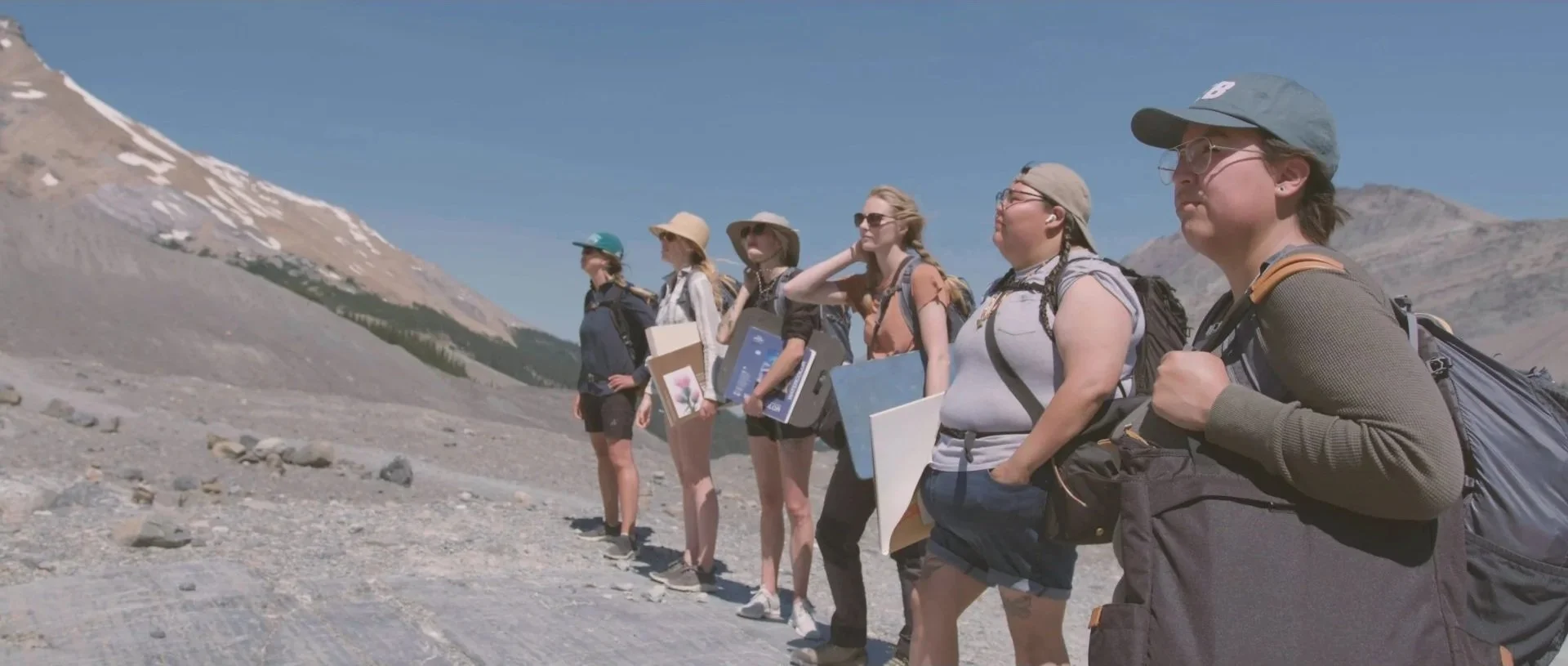
Rockies Repeat follows Indigenous and settler artists Ariel Hill, Kayla Eykelboom, Cheyenne Ozînjâ θîhâ, Sikapinakii Low Horn, Emily Beaudoin, and Kerry Langlois as they retrace Whyte’s footsteps through the mountains. Working across painting, beadwork, glass, photography, and other forms, each artist sets out to reinterpret the landscape through her own experiences, culture, and artistic practice.
But the Rockies they encounter are not the ones Whyte painted. Glaciers have retreated, wildfire smoke obscures mountain horizons, and extreme heat follows them into the field. What begins as an artistic expedition becomes a story about memory, culture, climate change, and what it means to document a landscape in transition.
Watch Rockies Repeat on Wild Commons 👇
Rockies Repeat: Returning to the Canadian Rockies 100 Years Later
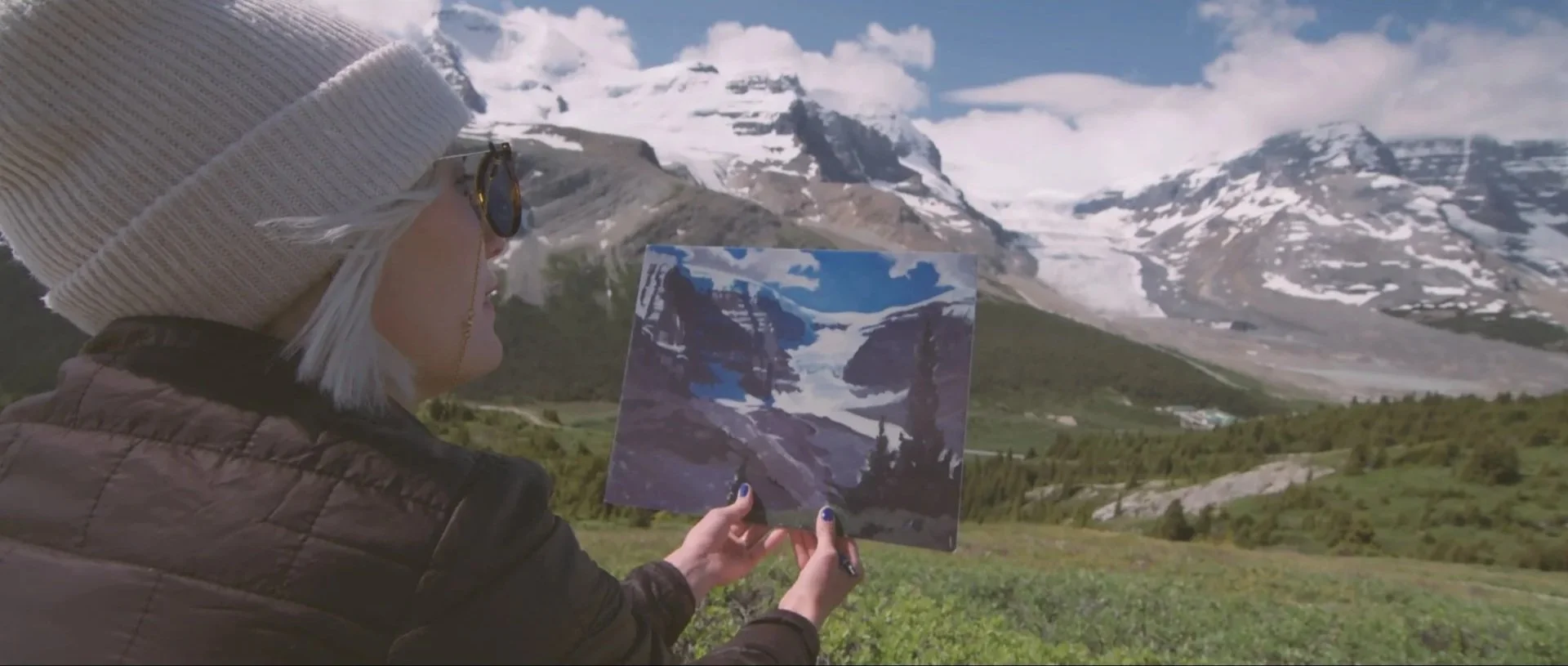
In the summer of 2021, six artists set out through the Canadian Rockies carrying reproductions of paintings made nearly a century earlier. Their guide was the work of Catharine Robb Whyte, an artist who arrived in Banff with her husband, Peter Whyte, in 1930 and spent much of her life painting the mountains around her. Her work captured glaciers, alpine lakes, forests, and familiar peaks at a particular moment in the history of a landscape that can easily appear timeless.
Director Caroline Hedin conceived Rockies Repeat as an opportunity to return to some of those places and see them again through contemporary eyes. The six artists were not asked to reproduce Whyte’s paintings. Instead, each was invited to respond to the landscape through her own medium and perspective, creating a new body of work informed as much by the person doing the looking as by the mountains themselves.
That approach gives the film much of its warmth. There is pleasure in watching artists work outside, experimenting with materials and talking through what they notice. Ariel Hill works in glass, Sikapinakii Low Horn incorporates beadwork, while other members of the group turn to painting and photography. The mountains provide a common subject, but the resulting work is strikingly different, shaped by each artist’s history, culture, craft, and relationship with the place around her.
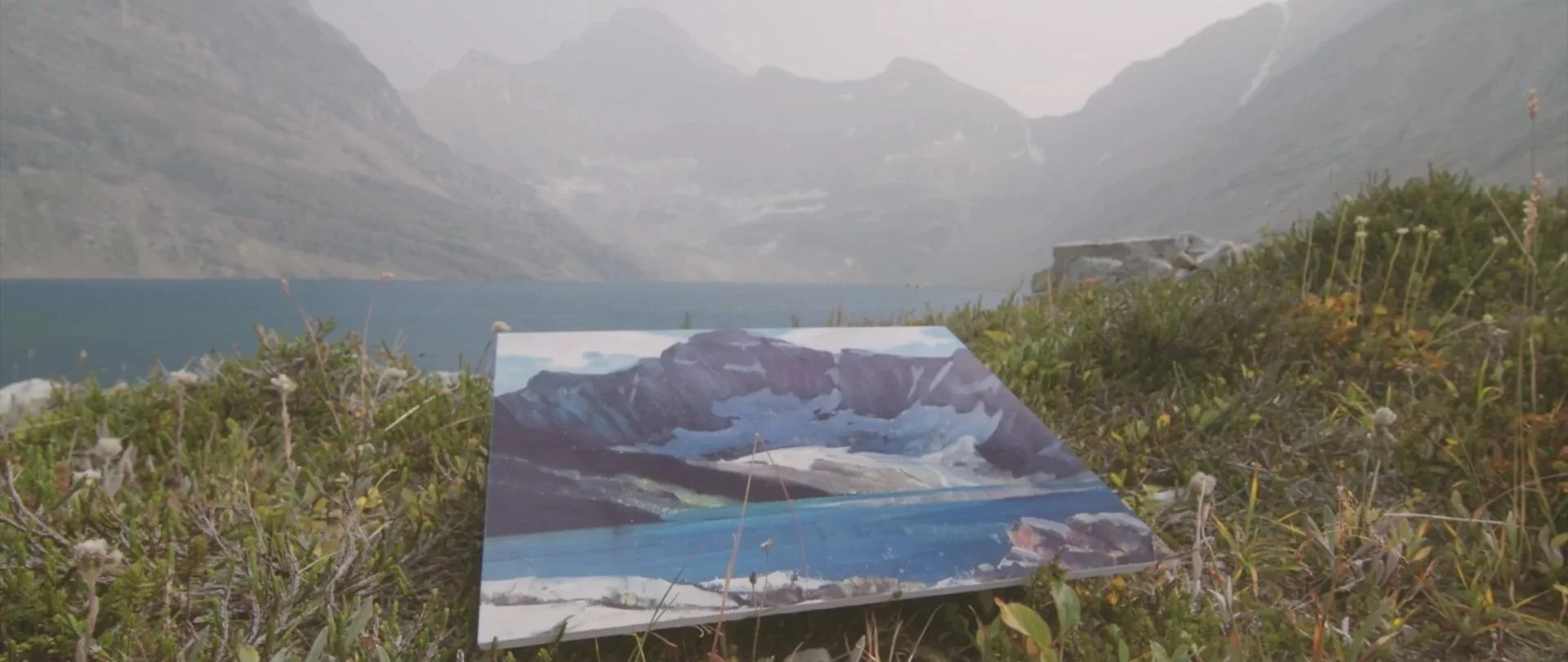
The expedition also makes clear how much the landscape itself has changed. The artists work through unusually high temperatures and periods of wildfire smoke that obscure the very mountains they have traveled to see. At the glaciers, the comparison with Whyte’s paintings becomes even more direct. Ice that once filled portions of her compositions has retreated, leaving the contemporary artists looking not only at an earlier interpretation of the landscape, but at a record of what used to be there.
It is an unusually effective way to approach climate change. Rather than beginning with projections or global statistics, Rockies Repeat stays at the scale of individual experience. A painting made decades ago becomes a point of comparison, and environmental change becomes visible in the distance between what one artist saw and what another encounters generations later.
More Than a Century of History
Whyte’s paintings emerged from a tradition of Western landscape art that often represented the Canadian Rockies as vast, pristine wilderness. Those images helped shape the way generations of visitors have imagined the region, but the mountains were never empty. Indigenous peoples have maintained relationships with these lands for far longer than the century separating Whyte from the contemporary artists following her path.
The Indigenous artists participating in Rockies Repeat bring that longer history into the project. Their perspectives broaden what initially appears to be a comparison between past and present into a conversation about culture, belonging, and representation. The question is no longer simply how the mountains have changed since Whyte painted them, but how different people have understood and represented these landscapes across time.
Cheyenne Ozînjâ θîhâ, an artist from the Stoney Nakoda Nation in Alberta, Canada, addresses that history directly through her work. Where many historical landscape paintings present mountains without human figures, her interpretation puts people back into the scene. It is a relatively simple artistic decision with larger implications. The Rockies cease to function merely as scenery and become a place inhabited, remembered, and understood through generations of human experience.
Creating a Record for the Next Generation
The contemporary artworks created during the project eventually became part of the story themselves. In 2022, they were exhibited at the Whyte Museum of the Canadian Rockies alongside Catharine Robb Whyte’s original paintings, allowing visitors to encounter interpretations of the same landscapes separated by nearly a century.
Placed together, the works resist the idea that any single image can represent a place definitively. Whyte recorded the Rockies she encountered in her lifetime. The artists of Rockies Repeat have done the same, creating another collection shaped by a different moment, different experiences, and a landscape already altered by a warming climate.
There is an unavoidable question hanging over those contemporary works: what will they look like to someone another century from now? The artists know that they are documenting glaciers that are retreating and ecosystems undergoing rapid change, but they cannot know what future visitors will encounter in these same locations. Their artwork has therefore become part of the record that originally inspired the project.
That circularity gives Rockies Repeat much of its emotional power. Whyte could not have known that artists nearly 100 years later would carry her paintings back into the mountains and use them to understand what had changed. The contemporary artists cannot know how their own work might eventually be used or interpreted either. They can only document the landscape in front of them and leave another set of images for whoever comes next.
Caroline Hedin | Wild Commons
Behind the Film: Caroline Hedin
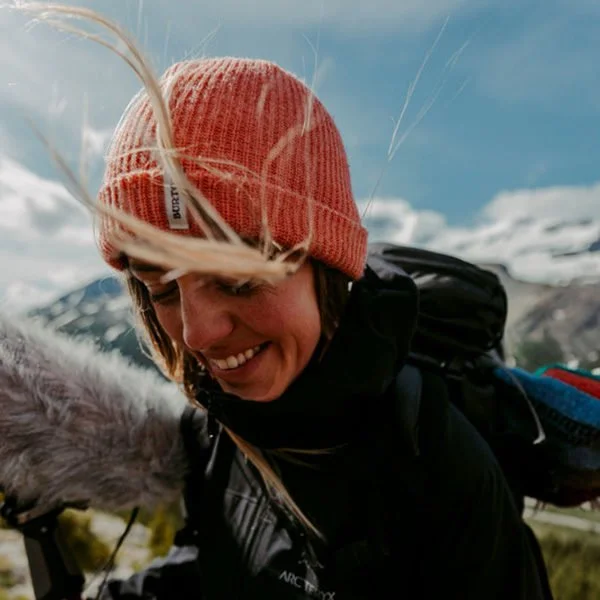
Rockies Repeat was conceived and directed by Caroline Hedin, a Canmore-based filmmaker and science storyteller whose work explores conservation through the relationships people build with landscapes.
Rather than approaching climate change primarily through scientific explanation, Hedin built the project around art, culture, and memory, allowing environmental change to emerge through the experiences of the artists themselves. The project eventually expanded beyond the boundaries of a traditional documentary. Historical paintings, contemporary artwork, photography, film, and museum exhibition all became part of the same conversation, giving audiences multiple ways to consider how the Rockies have changed and how our understanding of them continues to evolve.
Rockies Repeat was Hedin’s first documentary and had its world premiere at the Banff Centre Mountain Film and Book Festival in 2021. It subsequently screened through environmental and mountain film programs including EarthX, Kendal Mountain Festival, No Man’s Land Film Festival, and Wild & Scenic. Hedin has continued telling conservation stories through FieldLab Films, with a focus on the connections between science, communities, and the natural world.
Her approach in Rockies Repeat is particularly effective because she never asks the film to resolve the questions it raises. The six artists are allowed to disagree, interpret, experiment, and bring their own histories into the mountains. The resulting film feels less like an argument about how we should understand the Canadian Rockies than an invitation to consider how many different ways there are to see them.
Film Credits
Directed by: Caroline Hedin
Director of Photography: Jamie Wensley
Presented by: Rundle Films and Transmission Media (now Fieldlab Films)
Produced by: Caroline Hedin, Jamie Wensley, Viktoria North, and Carrie Yap
Editor: Jamie Wensley
Score: Tyler Bragg
Subject: Art, Climate Change, Indigenous, Culture
Runtime: 20 mins
Release Year: 2021
WHY THIS FILM BELONGS ON WILD COMMONS
At Wild Commons, we are interested in films that expand the language of nature storytelling, and Rockies Repeat does exactly that. It is a climate documentary told through art, a story about environmental change that is equally interested in culture, history, identity, and the deeply personal ways people become attached to landscapes.
It also makes room for multiple perspectives without flattening them into a single message. Six artists can stand in front of the same mountain and notice different things. Catharine Robb Whyte could stand there a century earlier and see something different again. Together, those interpretations give us a richer understanding of a place than any one image could provide on its own.
That idea feels particularly important at a moment when the landscapes around us are changing quickly. Rockies Repeat reminds us that documenting those changes does not belong exclusively to scientists. Artists, filmmakers, communities, and the people who know a place intimately all contribute to the record of what existed, what changed, and what it meant to the people who were there to see it.
The Rockies captured in this film will not remain exactly as they are today. That makes the act at the center of Rockies Repeat feel both simple and consequential: return to a place, pay close attention, and leave something behind for the people who will come next.