The Path of Puma 36 | Wild Commons
A young mountain lion sets out in search of a place to call his own.
Over the next 1,500 miles, Puma 36 crosses busy highways, swims rivers, moves through redwood forests, farmland, and neighborhoods, and navigates a Northern California landscape increasingly shaped by people. THE PATH OF PUMA 36 follows his remarkable journey as researchers track his movements and the risks he encounters along the way.
Watch The Path of Puma-36, a wildlife documentary following a young mountain lion’s dispersal journey through Northern California and the growing challenge of coexistence in a human-dominated landscape.
The Path of Puma-36
At around a year and a half old, young mountain lions leave their mothers and begin life on their own. Researchers call them dispersal cats. Females often establish territories relatively close to their mothers, while males typically travel much farther, searching for a territory while learning to hunt, avoid other mountain lions, and survive alone.
For P-36, a young mountain lion born in Northern California, that transition meant setting out across a landscape where wild habitat and human development are increasingly intertwined.
The Path of Puma-36, directed by Amelie Bluestone, follows that journey. P-36’s story offers an intimate look at a period of a mountain lion’s life that is both entirely natural and increasingly complicated. Dispersal has always required young lions to travel into unfamiliar territory, but today those movements can take them through a patchwork of wild and developed landscapes filled with roads, neighborhoods, other territorial lions, and countless human obstacles.
Mountain lions are solitary and elusive animals that generally avoid people whenever they can. But as habitat becomes fragmented, young lions searching for territories of their own are increasingly forced to move through human-populated areas. The encounters that result can easily be understood as wildlife entering human space, when from the animal’s perspective, it is simply moving through the landscape available to it. The Path of Puma-36 places that tension at the center of the film, using one animal’s journey to explore the increasingly complicated relationship between wildlife, habitat, and human development.
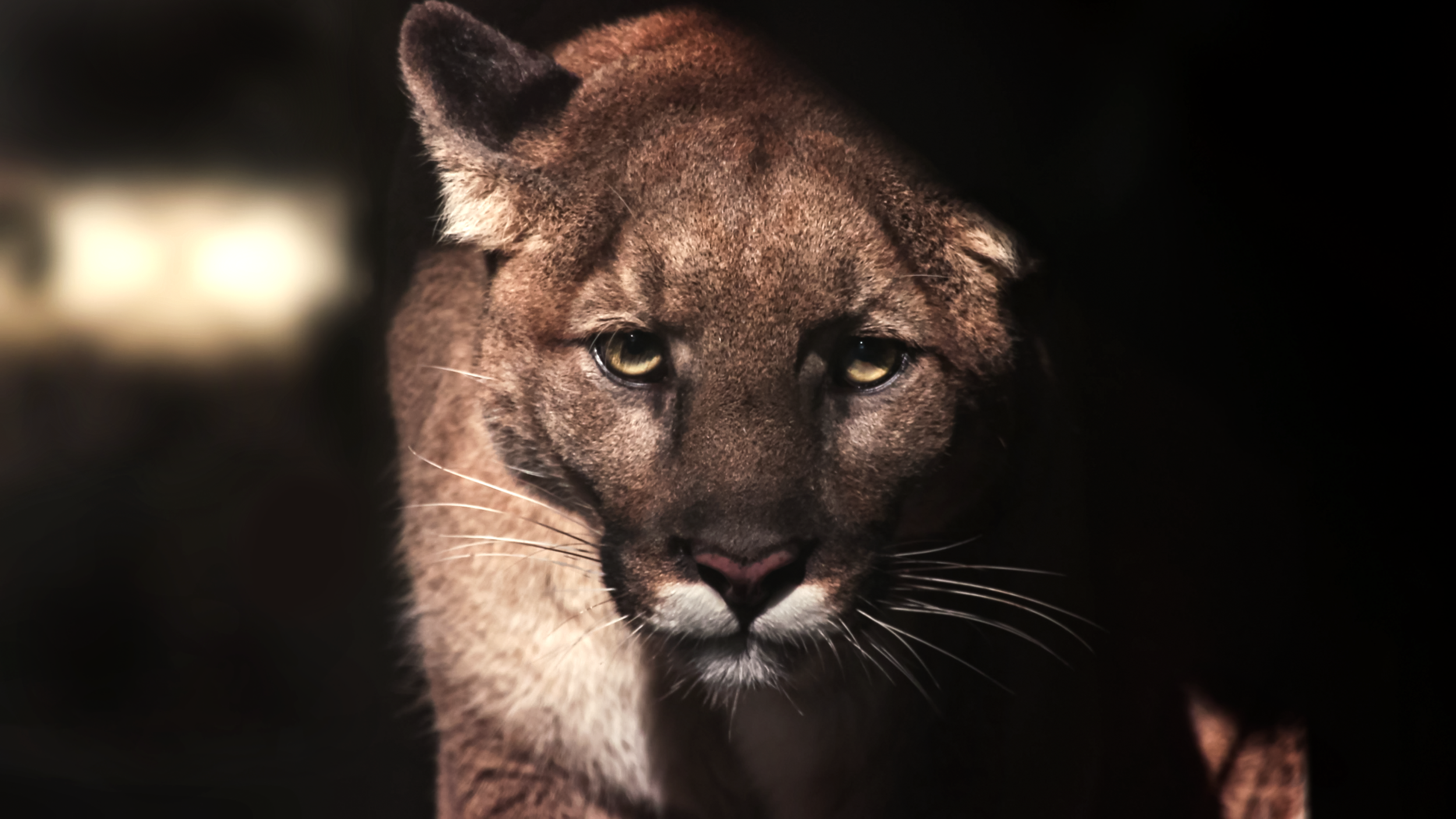
Following an Animal We Rarely See
P-36 was already being observed before he began his dispersal journey. Research trail cameras maintained by the Living with Lions Trail Camera Project at All Hands Ecology captured him as a young mountain lion traveling with his mother and siblings through California’s North Bay. The footage offers a rare view into the early life of an animal that can live surprisingly close to people while remaining almost entirely unseen.
That footage is also part of a much larger scientific effort to understand how wildlife uses human-altered landscapes. Trail-camera studies allow researchers to document wildlife movement and identify important habitats and wildlife corridors. Over time, those observations can help conservationists understand where animals are moving and which parts of the landscape may be especially important for maintaining healthy ecosystems and supporting human-wildlife coexistence.
There is something particularly compelling about encountering this kind of science through the story of an individual animal. Habitat fragmentation can feel abstract when represented as maps, roads, parcels, and corridors. Following P-36 makes the same landscape personal. Each developed area or human obstacle becomes part of an actual animal’s attempt to establish a life of its own.
It also complicates the familiar distinction between human places and wild ones. A mountain lion passing through a backyard may leave little evidence that it was ever there, but a research camera can transform that brief appearance into valuable conservation data. Places that appear completely ordinary to us may simultaneously function as habitat, passageways, or points of connection for wildlife moving through them. The world P-36 inhabits is not separate from ours. It overlaps with it.
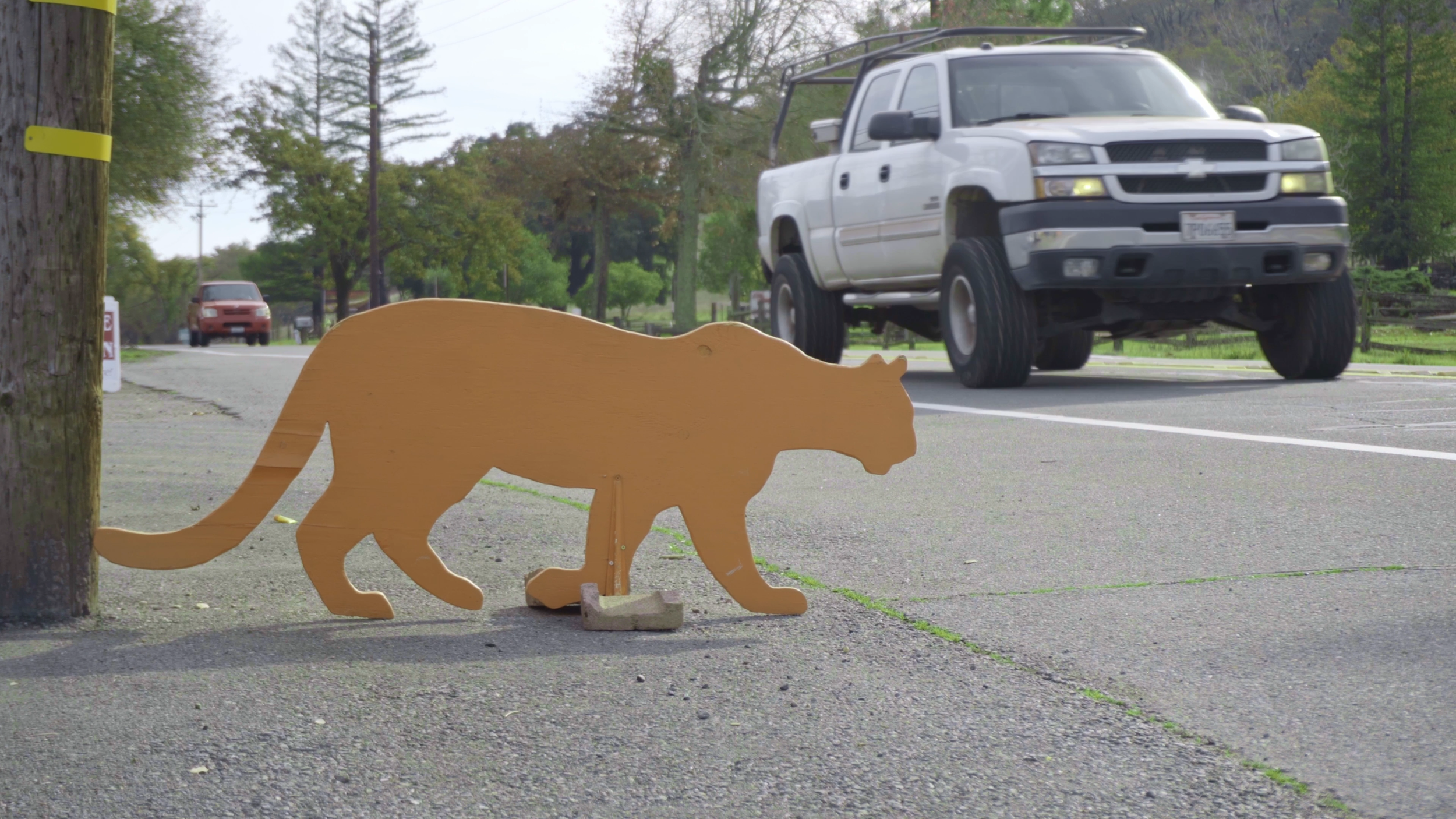
Learning to Live With Lions
That overlap is central to the conservation story behind the film. Mountain lions are keystone predators that contribute to the health and function of the ecosystems they inhabit. Protecting them therefore means thinking beyond the survival of individual cats to the habitats and connected landscapes that allow mountain lion populations, and the ecosystems around them, to persist.
It also requires a more nuanced understanding of conflict. Mountain lions can inspire fear simply because they are large predators, yet they are generally solitary, elusive, and inclined to avoid people. As development continues to fragment wild habitat, however, the opportunities for people and mountain lions to encounter one another increase. P-36’s journey reframes those encounters not as evidence of an animal that has wandered somewhere it does not belong, but as part of the difficult reality of wildlife trying to survive in an increasingly human-dominated landscape.
For Bluestone, that story sits at the intersection of filmmaking and conservation. A documentary filmmaker and aspiring conservationist from the San Francisco Bay Area, she uses film to connect audiences with the natural world and the challenges facing wildlife. Through P-36’s story, she hopes to deepen public understanding, inspire action, and foster greater coexistence between humans and the wild animals living alongside us.
The Path of Puma-36 is ultimately a film about one young mountain lion doing something mountain lions have always done: leaving his mother and searching for a place of his own. What has changed is the landscape through which that journey now unfolds. P-36 must navigate a world shaped not only by prey, habitat, and other lions, but by people. Following him makes visible the challenge of maintaining wild lives in places where human and animal worlds can no longer be neatly separated.
His story also offers a different way of thinking about coexistence. Protecting wildlife is not only a question of preserving distant wilderness. It is also about understanding how animals move through the places between those protected landscapes, including the developed spaces we consider our own. If mountain lions are going to continue moving across these landscapes, conservation will depend in part on our willingness to recognize those connections and make room for them.
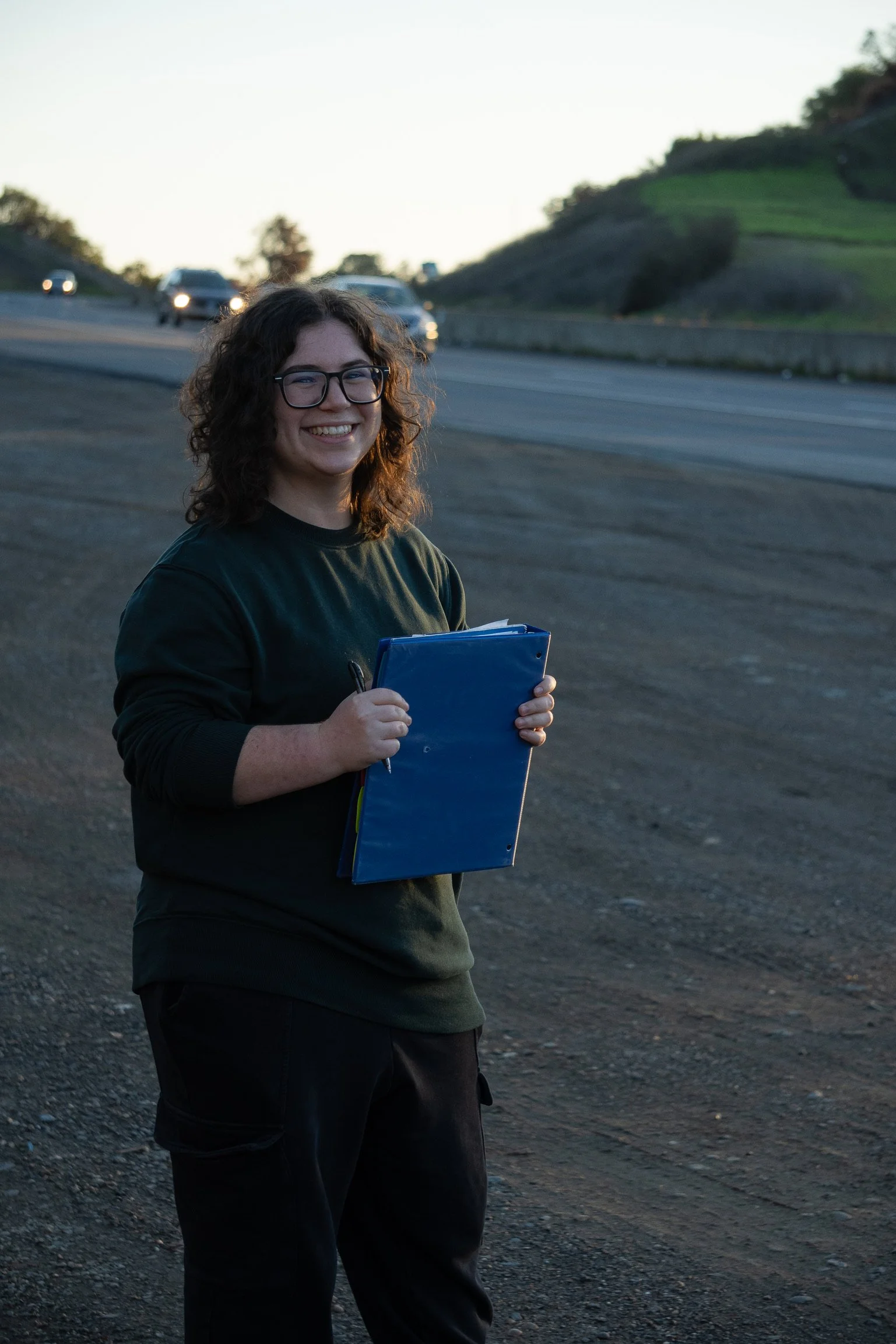
Amelie Bluestone | Wild Commons
Behind the Film: Amelie Bluestone
Amelie Bluestone is an emerging natural history filmmaker from the San Francisco Bay Area whose work focuses on environmental conservation and the relationship between people and wildlife. A graduate of the Savannah College of Art and Design with a BFA in Film & Television, Bluestone directed, produced, and edited The Path of Puma-36 as her senior thesis film.
Bluestone grew up in Fairfax, California, and had long been fascinated by mountain lions when she learned about P-36, a juvenile male whose movements were being tracked through the Living with Lions project. What caught her attention was both the challenges he faced and the unusual scale of his journey. P-36 traveled roughly 1,400 miles across Northern California while searching for territory, including through Lake, Napa, Sonoma, and Marin counties. “P36 is a great example of what mountain lions go through on a day-to-day basis, but he did travel a remarkable distance,” Bluestone told The Ark. “And that’s what made him stand out to me and what made his story so interesting.”
The Path of Puma-36 continues a thread already present in Bluestone’s filmmaking. Her previous work includes Invasion of the Bucket Snatchers, an exploration of the science and benefits of composting, and Flipping Off, a documentary examining relationships between sea lions and their trainers and what those relationships can reveal about conservation. Alongside filmmaking, Bluestone has been building hands-on experience in wildlife conservation to inform her environmental storytelling.
That combination of filmmaking and conservation is central to how Bluestone describes her work. In materials provided for The Path of Puma-36, she describes her goal as using film to connect audiences with the natural world and the challenges facing wildlife. Through P-36’s story and her future work, she hopes to deepen public understanding, inspire action, and foster coexistence between humans and their wild neighbors.
Since its completion, The Path of Puma-36 has brought that conversation to audiences through film festivals and conservation events. The film was an official selection at the SCAD Savannah Film Festival and received the Special Jury Award for Best Wildlife Film at the Green Film Festival of San Francisco. Bluestone has also participated in community screenings and discussions about mountain lion behavior, habitat protection, and coexistence in Marin County, bringing P-36’s story back to the landscape where much of it unfolded.
Film Credits
Director / Producer / Editor: Amelie Bluestone
Producer: Ashton Whitman
Co-Producer: Leo Frank
Director of Photography: Megan Mullen
2nd Unit DP: Kaeley Beam
Location Sound: Haley Foster
Sound Supervisor: Matt Michelangelo
Contributing Composer: Jacob Kitchen
Colorist: Nissy Davis
Trailer Editor: Joshua Zapf
Subject: P-36, a young mountain lion from Northern California, sets out on his dispersal journey in search of a territory of his own.
Runtime: 15 minutes
Release Year: 2026
WHY THIS FILM BELONGS ON WILD COMMONS
Wild Commons is interested in films that bring us closer to the lives unfolding around us, particularly the lives that are easy to overlook. The Path of Puma-36 takes a broad conservation challenge and allows us to experience it through one animal’s journey. The result is a film about mountain lions, but also about movement, habitat, and what coexistence actually looks like in a world where the boundaries between people and wildlife are increasingly porous.
P-36 may be the animal we follow, but the landscape is the larger story. His journey asks us to reconsider what counts as wild space, who moves through the places we call home, and what it might mean to leave enough room for those journeys to continue.