Bison in 4K | Wild Commons
On the outskirts of Denver, a herd of American bison moves across the shortgrass prairie of Rocky Mountain Arsenal National Wildlife Refuge. Their presence marks an extraordinary chapter in the history of a landscape once transformed into a chemical weapons manufacturing facility and later designated a Superfund site. In this ambient wildlife film, there is no narration and no story to follow. Just time to watch the herd graze, rest, and move through a prairie being made wild again.
Watch BISON in 4K | 4 Hours of Relaxing Nature — spending uninterrupted time with a herd of American bison on the restored prairie of Rocky Mountain Arsenal National Wildlife Refuge.
On the outskirts of Denver, the Great Plains begin to open.
The skyline falls away. Grasses stretch toward the horizon. Prairie dogs disappear into burrows. Hawks circle overhead. And across the shortgrass prairie, a herd of American bison moves slowly through the landscape. It is a scene that feels ancient. But almost nothing about the history of this particular place is simple. The bison of Rocky Mountain Arsenal National Wildlife Refuge graze on land that has been transformed again and again: from prairie traversed by Indigenous peoples and vast herds of bison, to farmland, to one of the nation’s major chemical weapons manufacturing facilities, to a heavily contaminated Superfund site, and finally, improbably, back toward prairie again.
Their presence here is not simply a wildlife success story. It is a reminder of just how dramatically humans can alter a landscape, and how much work it can take to give some part of it back.
FROM PRAIRIE TO ARSENAL
Long before Denver spread across Colorado’s Front Range, bison were part of the ecology of these plains. Apache, Arapaho, Cheyenne, Comanche, and Ute peoples followed bison herds and lived across this landscape. As European settlers moved west, much of the prairie was converted to farms and cattle pasture.
Then came World War II.
In 1942, the U.S. Army established Rocky Mountain Arsenal northeast of Denver. The facility manufactured incendiary munitions and chemical warfare agents, including mustard agent. During the Cold War, the Arsenal was also used to manufacture the nerve agent sarin and to fill chemical munitions. After World War II, portions of the enormous complex were leased to private industry. Agricultural chemicals and pesticides were produced there for decades, with Shell Chemical Company operating pesticide manufacturing facilities from 1952 until 1982. The environmental consequences were extensive. Chemical wastes entered disposal basins and trenches. Contaminants spread into soil and groundwater. EPA investigations would eventually identify organochlorine pesticides, heavy metals, chemical-agent byproducts and industrial solvents among the principal contaminants at the site. Rocky Mountain Arsenal was placed on the Superfund National Priorities List in 1987.
For a landscape once defined by prairie, it would be difficult to imagine a more dramatic transformation. And yet wildlife never completely left.
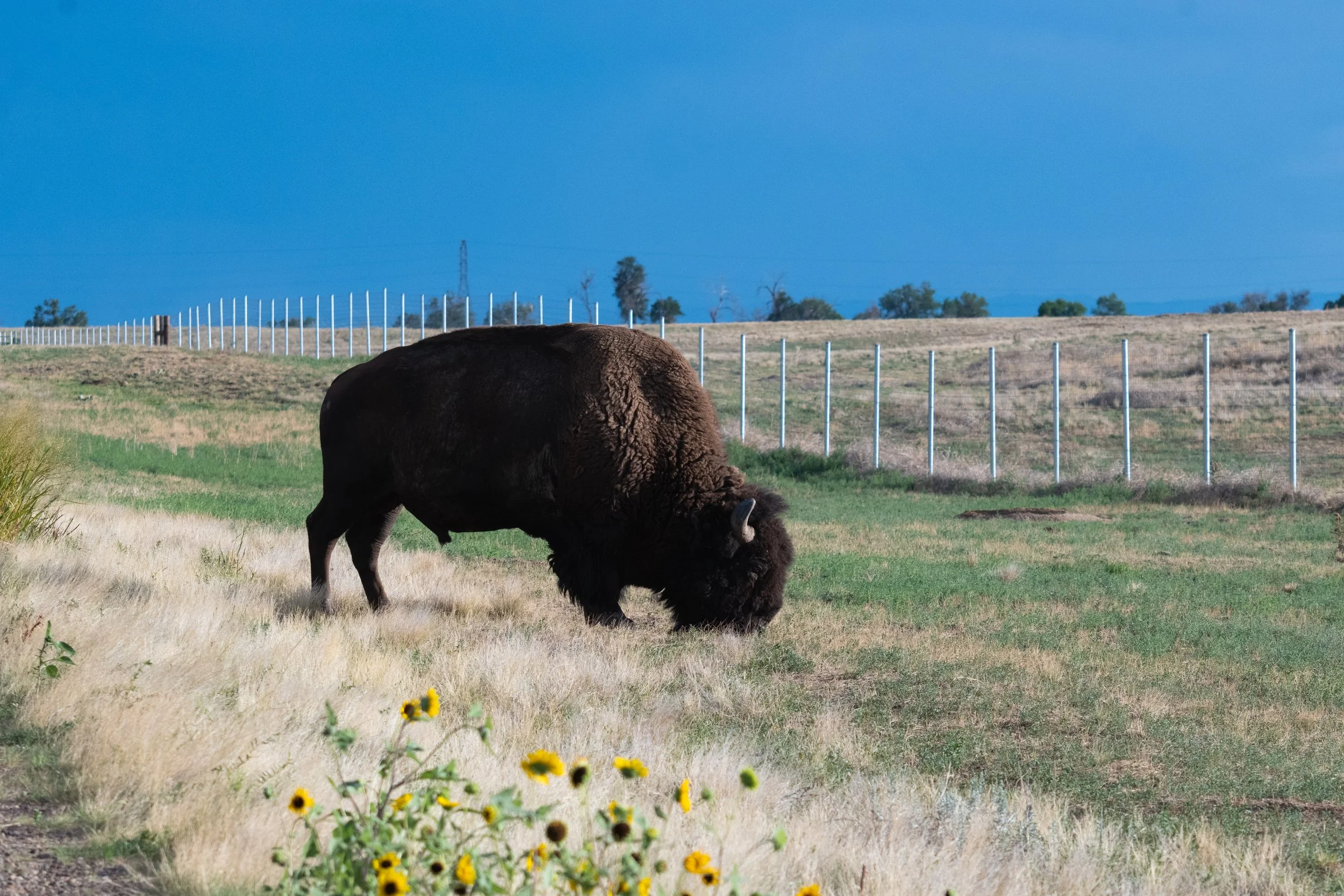
American bison grazing at Rocky Mountain Arsenal National Wildlife Refuge in Colorado / Lucas Pace
AN UNEXPECTED REFUGE
As industrial operations wound down, something unusual became increasingly apparent: despite decades of disturbance, the Arsenal had become important habitat. The discovery of bald eagles roosting at the site helped build momentum for protecting the landscape. In 1992, Congress passed legislation establishing Rocky Mountain Arsenal National Wildlife Refuge, setting in motion the gradual transfer of cleaned land to the U.S. Fish and Wildlife Service.
What followed was an enormous environmental cleanup.
According to the EPA, remediation has addressed approximately 3,000 acres of contaminated soil and 15 groundwater plumes. Today, the wildlife refuge occupies roughly 15,000 acres of the former Arsenal. But restoring a prairie means more than removing contamination. Prairies evolved with disturbance. Fire moves through them. Animals graze them. Soil is trampled and turned. Plants are eaten down in one place and left standing in another. For thousands of years, bison were one of the forces helping create that constantly shifting mosaic. By the late nineteenth century, the enormous wild herds that once moved across North America had been decimated. Their disappearance did not only represent the loss of a species from much of its range. It removed an animal that had helped shape the prairie itself.
So in 2007, bison came back to Rocky Mountain Arsenal.
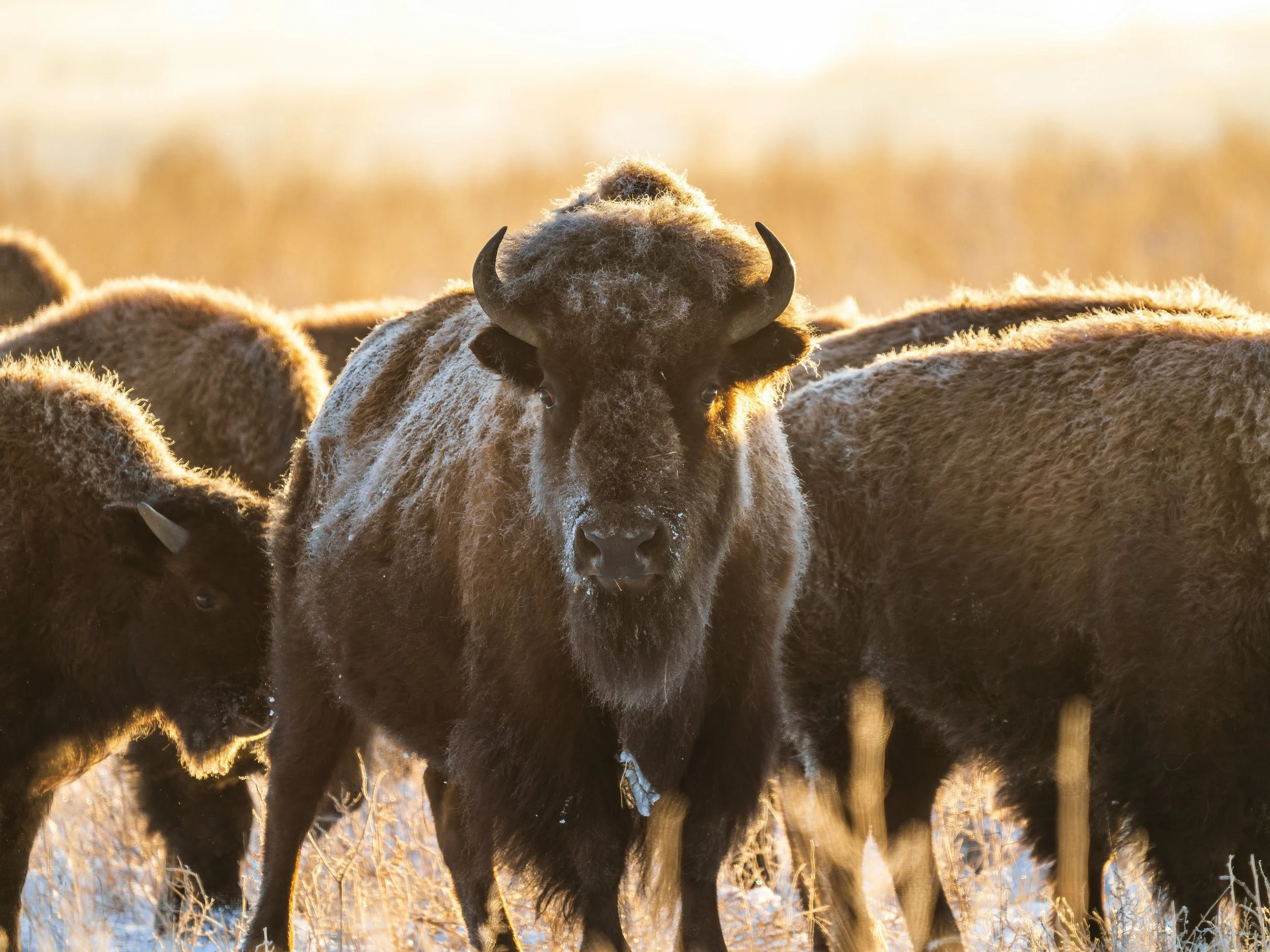
American bison (Bison bison) / Unsplash
THE RETURN OF THE BISON
The first herd was small: just 16 animals transferred from the National Bison Range in Montana. Their arrival was part of a larger U.S. Fish and Wildlife Service conservation effort.
Federal bison herds can preserve important genetic lineages, and moving animals among conservation herds helps maintain genetic diversity while establishing bison as functioning members of restored prairie ecosystems. At Rocky Mountain Arsenal, the animals also had a job to do. Bison grazing helps sustain prairie grasses and restore some of the ecological disturbance that historically shaped these landscapes. Refuge staff now manage the herd through annual roundups, health checks and transfers of animals to other refuges and conservation herds.
In other words, the bison are not simply displayed on a protected landscape. They are participating in it.
Conservation is sometimes imagined as the act of putting a fence around nature and leaving it alone. But ecosystems are built from relationships and processes. Restoring them often means restoring the interactions that once made them work. A prairie with bison is different from a prairie without them.
WATCHING THE PRAIRIE MOVE
There is no narrator explaining any of this in this Wild Commons ambient film. Instead, the camera stays with the herd. Bison graze. Calves follow adults through the grass. Bodies drift in and out of the group. The prairie moves in the wind, while Denver sits just beyond the refuge.
Knowing the history of Rocky Mountain Arsenal changes the experience of watching them. This is not untouched wilderness. It is not a landscape that somehow escaped human influence. It is a place that absorbed some of the defining forces of the twentieth century: war, industrialization, chemical agriculture, pollution, environmental regulation, cleanup and restoration.
And now there are bison here again.
That does not erase what happened to this land, nor does restoration return an ecosystem perfectly to its past. The Arsenal remains a Superfund site, with EPA oversight continuing to ensure that its remedies remain protective. Perhaps that is what makes this landscape so compelling. Rocky Mountain Arsenal is not a story about nature untouched. It is a story about what can happen after enormous damage has already been done. About the long, imperfect work of repair. And about the possibility that even a landscape profoundly altered by us can become a place where wild processes begin again.
For a while, there is nothing more to do than watch the herd move through the grass.
Film Credits
Cinematographer: Jackson Perkins
Producer: Wild Commons
Featuring: American Bison (bison bison)
Subject: Bison graze at the Rocky Mountain Arsenal in Denver, Colorado
Runtime: 4 hours
Release Year: 2026
WHY THIS FILM BELONGS ON WILD COMMONS
Not every nature story needs a narrator. Sometimes, simply spending time with another species can change the way we understand it.
Wild Commons was built around the idea that nature and science storytelling can take many forms. This film slows that storytelling all the way down. There is no argument to follow and no conclusion to reach.
Instead, it offers something increasingly rare: uninterrupted time to observe wild animals moving through a real landscape, at their own pace.
Bison are often reduced to symbols of the American West, but watching a herd reveals something richer: social animals grazing, resting, following one another, tending calves, and continually reshaping the prairie beneath their feet. The longer we watch, the less they become an idea and the more they become animals with lives unfolding beyond our own.
And perhaps that is enough. Documentary can teach us about the natural world, but it can also create space to simply experience it. On a channel dedicated to stories about our shared planet, we think there should be room for both.