Chasing Ghosts | Wild Commons
For decades, a mystery deep in the Florida Everglades has stumped researchers and enthusiasts. It wasn't until two photographers set out to conduct science differently that something amazing was discovered. Using photography as their medium, Carlton Ward Jr. and Mac Stone spent three years on a journey to find the first conclusive evidence of what pollinates the elusive ghost orchid.
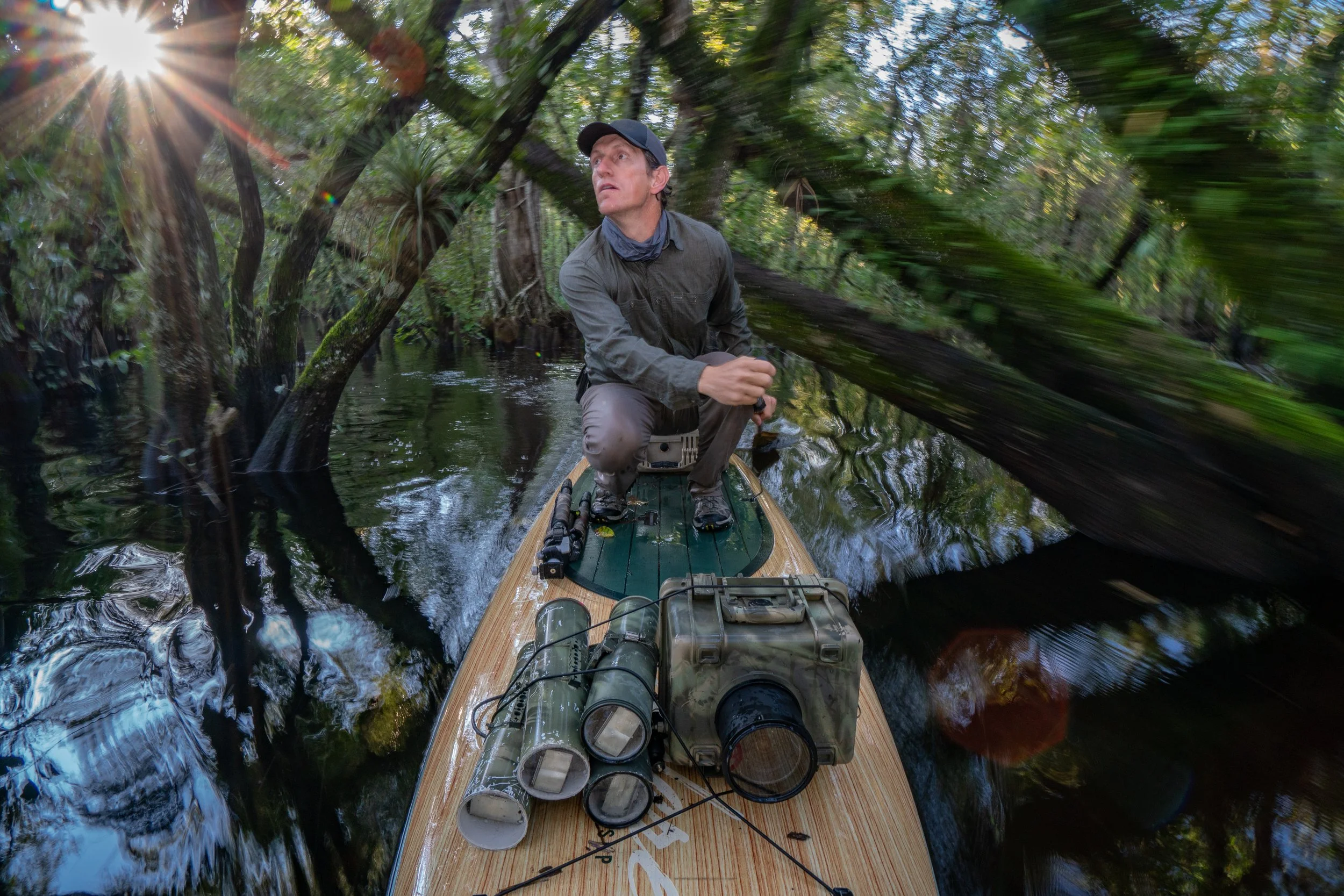
Chasing Ghosts follows photographers Carlton Ward Jr. and Mac Stone, alongside ecologist Peter Houlihan, in South Florida as they work to uncover the mystery of what pollinates the local ghost orchid. For three years they climbed fifty foot tree canopies, slept above water, waded through swamps, and paddleboarded across remote ecosystems. Hoping to capture the fleeting moment of ghost orchid pollination, they set up camera traps in likely locations, knowing their chances of success were slim.
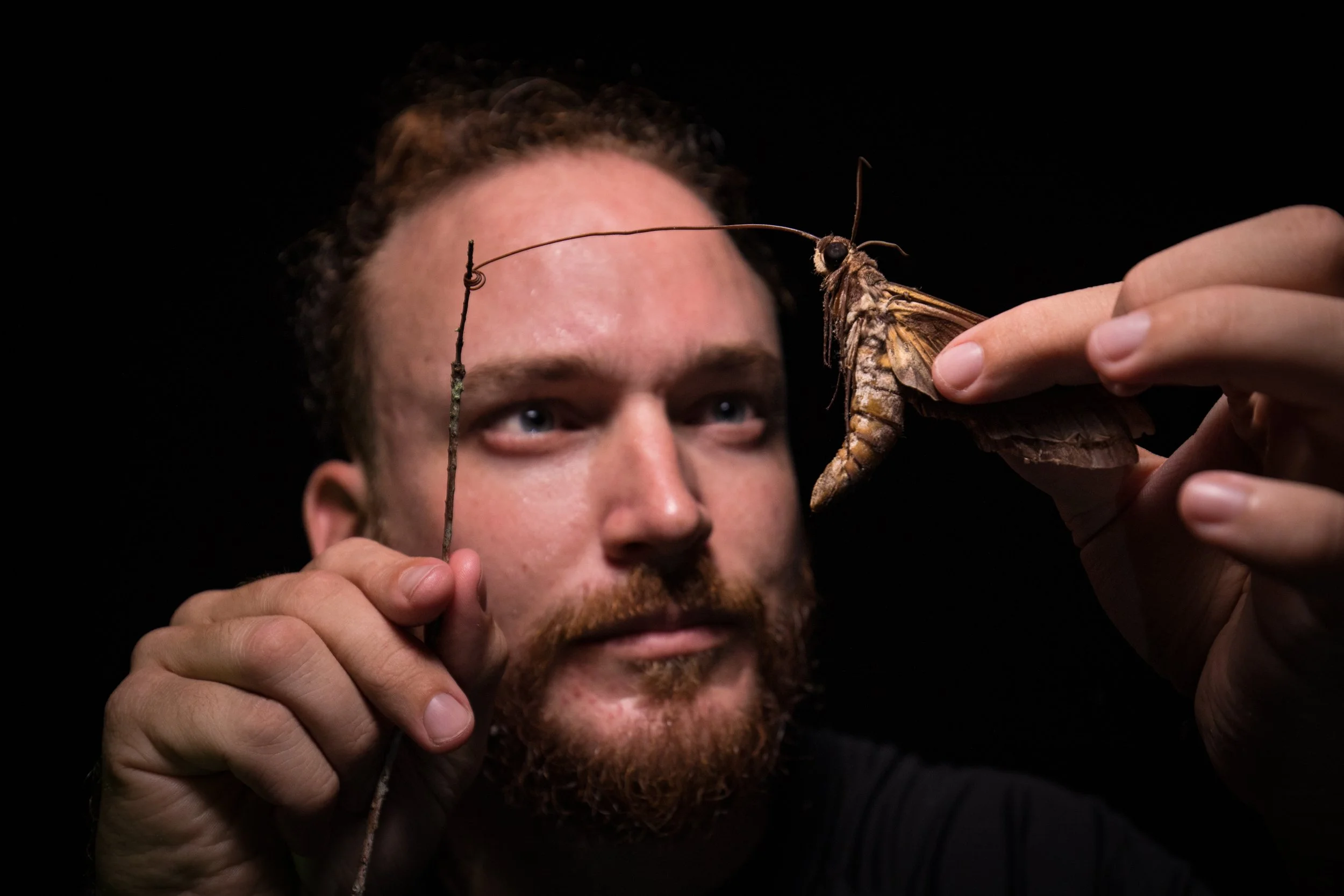
Ghost orchids are a rare and mysterious plant belonging to the most diverse group of flowering plants in the world: orchids. There are roughly 25,000 to 30,000 known orchid species worldwide, and the pollination of many of them has perplexed scientists since Charles Darwin observed an orchid in Madagascar over 150 years ago. The orchid he found had a nectar tube about a foot long, and he concluded its pollinator must have a proboscis, an appendage used for collecting nectar, just as long to reach the nectar at the bottom.
Strategy and luck both played a part in the search for the pollinator, believed to be a moth. The two photographers followed similar paths with separate strategies: Mac belayed from trees, while Carlton paddleboarded his way to trees where ghost orchids had been identified.
It quickly became clear why this phenomenon had never been recorded: it is simply that difficult to observe. The moth believed to pollinate the orchid is so rare that no one knows if one will even be in the vicinity, and it's so well camouflaged that it's nearly invisible to the human eye. On top of that, a camera trap has to be set on exactly the right flower, with exactly the right settings, to catch the brief moment of pollination on film.
This story isn't only about the technical challenge of the discovery. It's also a story about conservation and protection. For a plant to be so precisely adapted to a single pollinating insect means the evolutionary relationship is ancient. Ghost orchids are living remnants of the ancient forests that once stretched across the southeastern United States.
We as humans like a simple story, but it seems that, at least in this case, reality is a little more complex.
With 6,800 camera trap hours, 52,173 images captured, and five new large moth species discovered along the way, it would be easy to think of this story as one of pure discovery. But that isn't the heart of it. This story was made to inspire appreciation and conservation of South Florida's swamps, and to show the importance of protecting habitats found nowhere else on Earth.
The deep, flooded, remote swamps of Florida form cathedrals out of twisted, gnarled tree trunks. "It's dark, it's green, it feels like you're in the Amazon or in some other world." These remote swamps hold truly wild stories the rest of the world doesn't know about, stories that give us the perfect incentive to protect what little of these places we have left.
Film Credits
Filmmaker: Eric Bendick/Grizzly Creek Studios
Photographers: Carlton Ward Jr. and Mac Stone
Featuring: Ecologist Peter Houlihan
Location: The Florida Everglades, South Florida
Courtesy of: Carlton Ward Jr. and Mac Stone