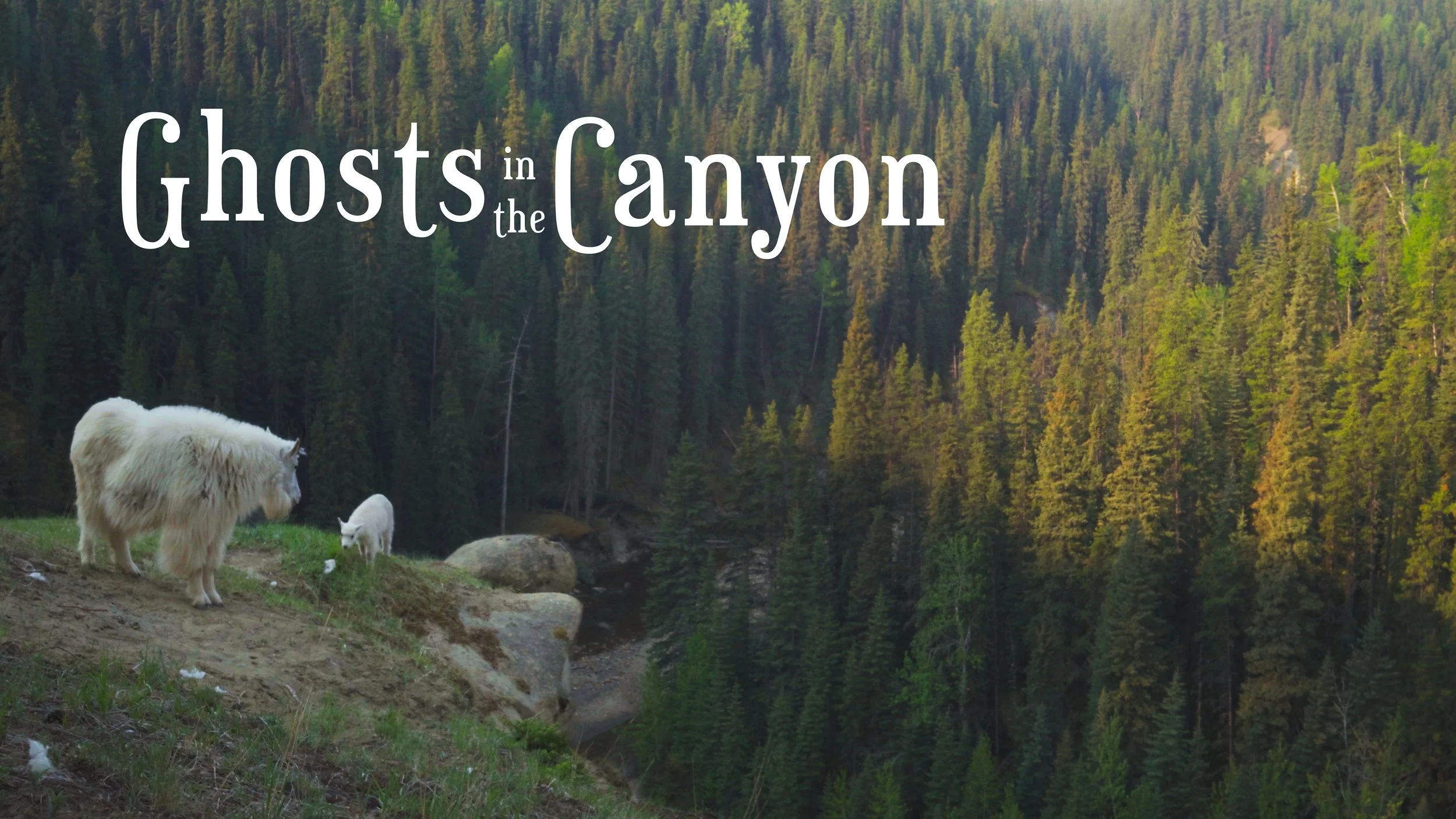
Deep in Alberta’s Pinto Canyon, a population of mountain goats is disappearing. Once regularly encountered in groups of 10 or 12, the animals have become so scarce that researchers can walk entire survey routes without seeing a single one.
Ghosts in the Canyon, directed by Jordan Hoffmaster and Jon Johnston, follows two researchers searching for signs of the missing goats. Although their cliffside habitat remains protected, industrial development has transformed the surrounding landscape, raising a troubling question: What happens when we protect an animal’s home but not the larger ecosystem it depends on?
Watch Ghosts in the Canyon, a wildlife documentary exploring the decline of Alberta’s mountain goats and the limits of habitat protection 👇
GHOSTS IN THE CANYON: WHEN PROTECTING HABITAT ISN’T ENOUGH
For years, researchers visiting Pinto Canyon in Alberta, Canada, could count on encountering mountain goats along its steep slopes. Groups of ten or twelve animals were a familiar sight, and each spring brought new kids into the population. The goats had established themselves in this rugged landscape, navigating cliffs that few other large mammals could traverse. But over time, the encounters became less frequent. Today, researchers can complete an entire survey without seeing a single goat.
In Ghosts in the Canyon, filmmakers Jordan Hoffmaster and Jon Johnston follow two researchers returning to the canyon in search of a population they have watched decline. Their work has become an exercise in finding what remains: tracks pressed into the ground, hair caught on vegetation, scat left along a trail. These small traces offer evidence that the goats may still be present, even when the animals themselves are nowhere to be seen.
The mystery is particularly troubling because the cliffs the goats inhabit remain protected. Yet beyond those boundaries, the surrounding landscape has changed considerably. Forestry operations, oil and gas development, and other human activities have altered the ecosystems that connect Pinto Canyon to the larger region. The film raises a fundamental question about conservation: can we protect a species by preserving the places where we find it, or must we also protect the ecological relationships that allow it to survive?
THE ECOLOGY OF AN ISOLATED POPULATION
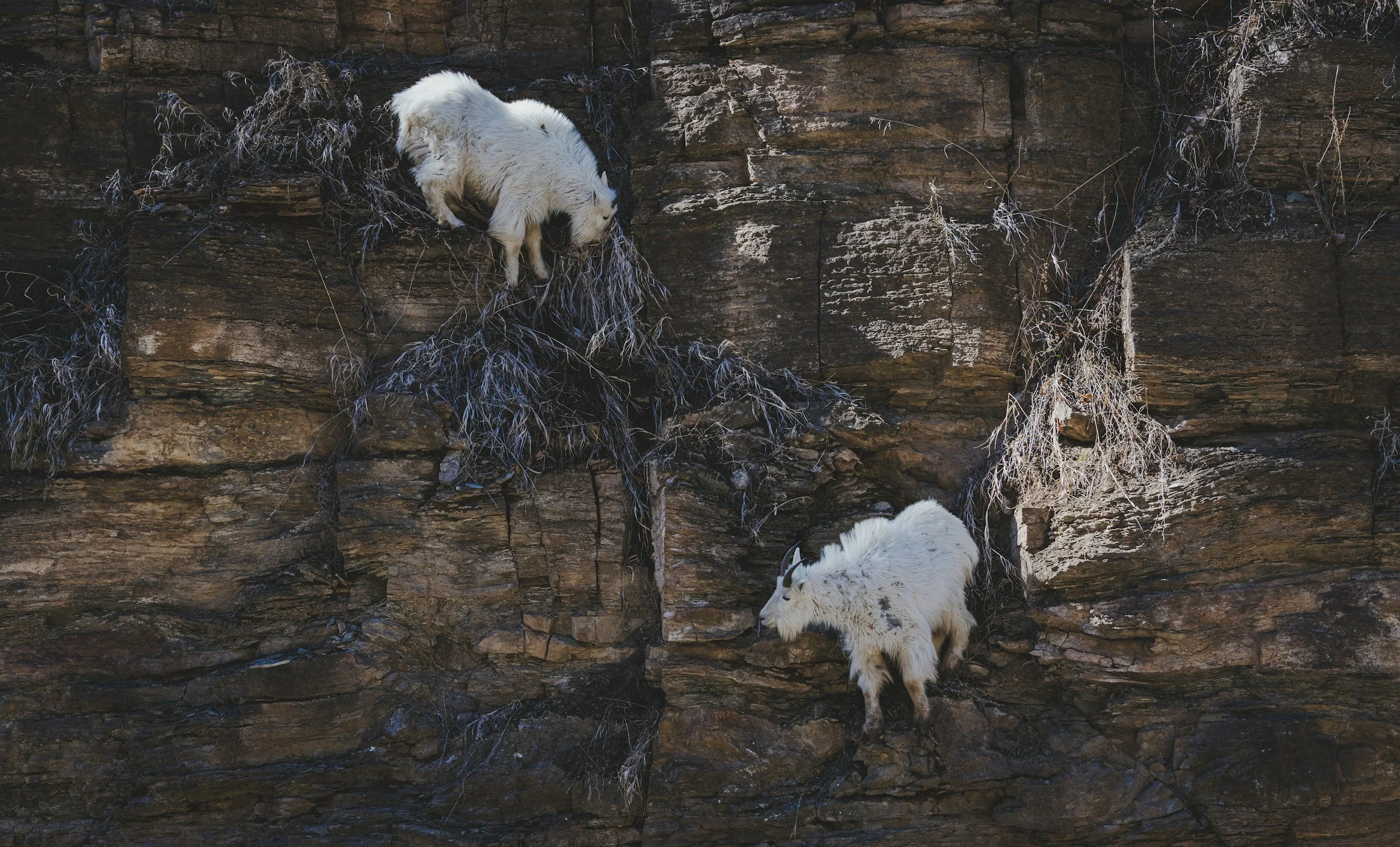
Mountain goats (Oreamnos americanus) are among North America’s most specialized mountain mammals. Their muscular bodies, powerful legs, and distinctive hooves allow them to navigate extraordinarily steep terrain, often using cliffs as refuge from predators. Although they are commonly associated with alpine environments, mountain goats also occupy lower-elevation habitats where suitable rocky terrain provides protection and access to food.
That specialization makes mountain goats particularly dependent on the geography of their habitat. Cliffs offer security, but the animals also need access to forage, seasonal movement routes, and other areas that may extend well beyond the rocky slopes where they are most visible. A population can occupy a protected canyon while remaining vulnerable to changes in the surrounding landscape.
For small, isolated populations, those pressures can be especially consequential. When animals become separated from neighboring groups, opportunities for dispersal and genetic exchange may diminish. Small populations are also more vulnerable to random events, fluctuations in reproduction, and the loss of individual animals. Even when suitable habitat remains, a population may struggle to recover once its numbers fall sufficiently low.
The researchers in Ghosts in the Canyon are confronting this uncertainty directly. Their surveys no longer provide the reassurance of regular sightings or newborn kids. Instead, they must piece together evidence of the animals’ continued presence while trying to understand what has changed. The absence of goats along a survey route does not necessarily mean they have disappeared entirely, but the contrast with earlier years suggests a population facing serious challenges.
WHEN PROTECTED AREAS BECOME ISLANDS
The decline of Pinto Canyon’s mountain goats illustrates one of the central challenges in modern conservation. Protected areas are essential for preserving wildlife habitat, but their effectiveness often depends on what happens beyond their boundaries.
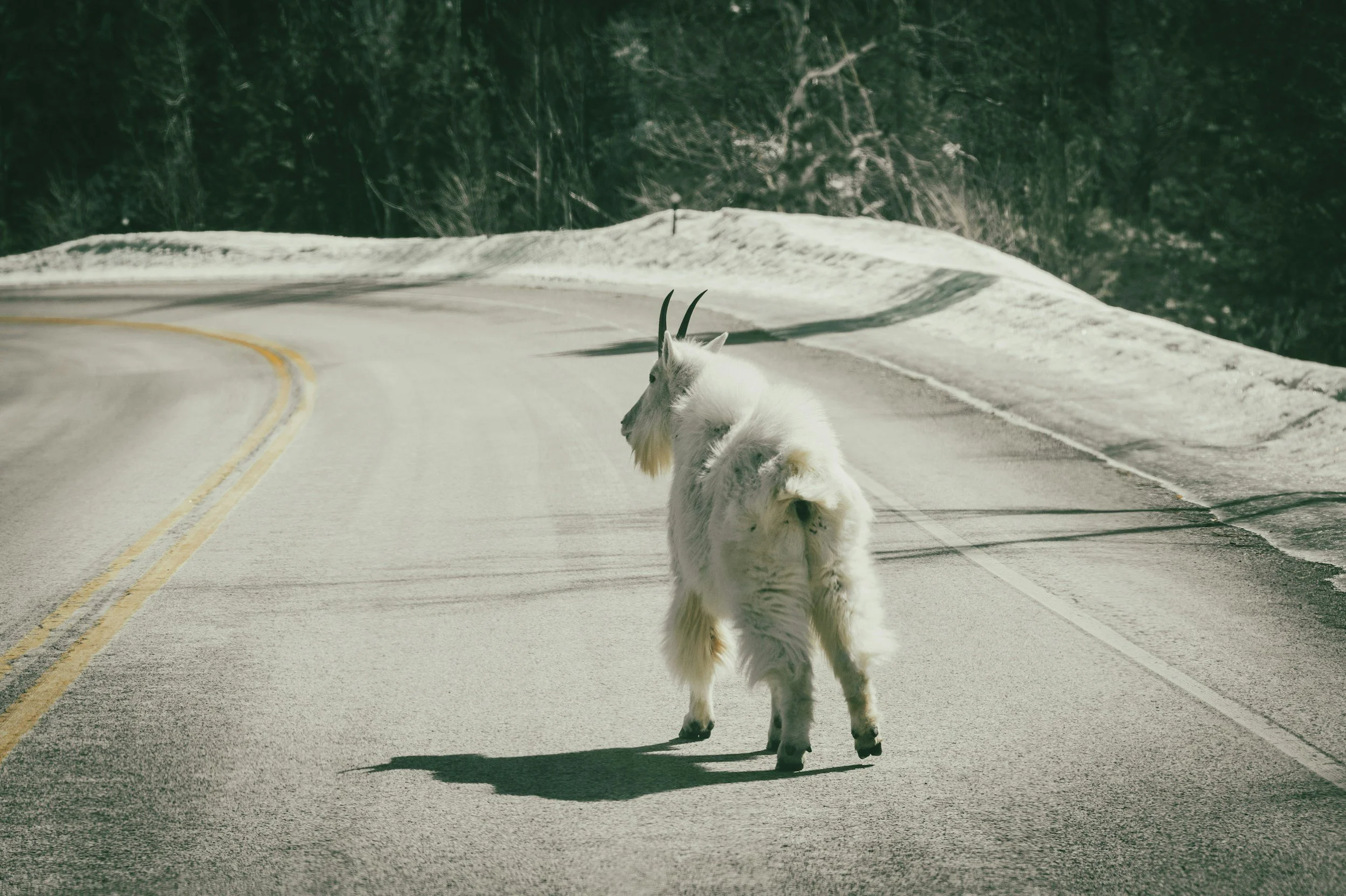
Animals rarely organize their lives according to the borders of parks, reserves, or designated conservation areas. They move between feeding grounds, breeding territories, seasonal habitats, and neighboring populations. These movements connect individual patches of habitat into larger ecological systems. When development disrupts those connections, even well-protected areas can become increasingly isolated.
In Alberta, resource extraction and forestry have transformed substantial portions of the landscape. Roads, industrial infrastructure, and other disturbances can alter how wildlife moves through an area, change habitat conditions, and increase human access to previously remote places. The effects vary among species and landscapes, but the broader conservation concern is consistent: protecting a relatively small area may accomplish little if the ecological processes supporting it are disrupted elsewhere.
For mountain goats, the consequences of these changes are not necessarily straightforward. Their reliance on steep terrain can make populations appear secure within protected cliffs, even as the surrounding landscape becomes less hospitable. The challenge is understanding how activities beyond the canyon may influence movement, survival, and the long-term viability of the population.
Ghosts in the Canyon does not offer a simple explanation for the goats’ decline. Instead, it documents the difficulty of understanding what is happening to a population that has become increasingly difficult to observe. The researchers’ search reveals both the value of long-term monitoring and the uncertainty that can remain even after years of fieldwork.
WHAT DISAPPEARS WITH THE GOATS?
Pinto Canyon is home to far more than mountain goats. Grizzly bears, wolves, mountain lions, birds, and countless smaller organisms occupy the surrounding landscape, forming a network of relationships that extends across the canyon and beyond. The goats are one part of that larger ecological community, interacting with predators, vegetation, and other species through the ordinary processes of survival.
When a population declines, the consequences may extend beyond the loss of the animals themselves. Herbivores influence vegetation through grazing and browsing, while their movements, waste, and eventual deaths contribute to the movement of nutrients through an ecosystem. They also form part of the food web, providing potential prey or carrion for other animals. The ecological importance of any particular population depends on its abundance, behavior, and relationships with other species, but its disappearance can alter connections that have developed over generations.
For the researchers returning to Pinto Canyon, the loss is also personal. Years of repeated visits have given them a familiarity with the animals and their habitat that cannot easily be replaced. They remember a time when finding goats was an expected part of their work. Now, the same landscape offers little evidence of the population they once knew.
That contrast gives Ghosts in the Canyon much of its emotional weight. The film is not built around a dramatic rescue or a definitive scientific discovery. It follows the quieter work of documenting ecological change, when the most significant observation may be the absence of something that used to be there.
The story of Pinto Canyon ultimately asks us to reconsider what successful conservation looks like. Preserving a stretch of habitat is an important achievement, but it cannot guarantee the survival of the species that depend on it. Wildlife populations are sustained by relationships that extend across landscapes, often beyond the boundaries we have chosen to protect. Understanding those connections, and recognizing what happens when they are disrupted, may be essential to preventing more populations from becoming ghosts in the places they once inhabited.
Meet the filmmakers
Jordan Hoffmaster and Jon Johnston are documentary filmmakers based in Missoula, Montana, whose work explores wildlife, conservation, and the relationship between people and the natural world.
Hoffmaster’s recent documentary Something to Hold (2026) follows artist and mountaineer Jonathan Marquis as he completes a decade-long project to draw Montana’s remaining glaciers. The film premiered at the 2026 Big Sky Documentary Film Festival and was selected for the International Wildlife Film Festival. Hoffmaster is also directing Stewards of Land, a documentary series following scientists and conservationists restoring biodiversity on a former cattle ranch in Montana.
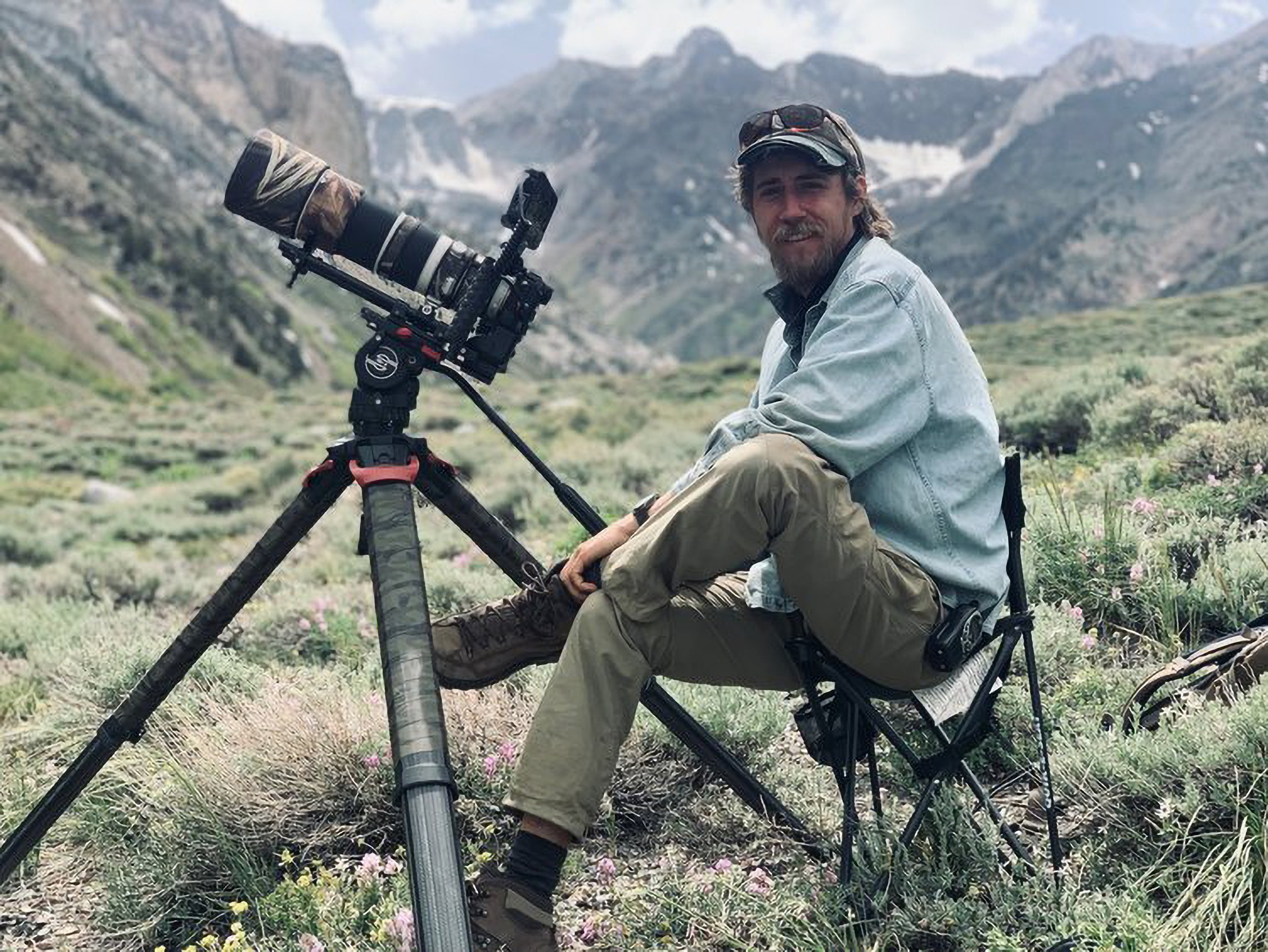
Johnston is a natural history cinematographer, biologist, and certified professional wildlife tracker specializing in filming elusive animals and their behavior. Through his production company, Muddy Hollows Films, he brings extensive experience working in remote environments, combining scientific knowledge, advanced camera techniques, and field tracking skills to capture wildlife rarely seen by human observers.
Together, Hoffmaster and Johnston bring complementary perspectives to Ghosts in the Canyon, combining documentary storytelling with a deep understanding of wildlife and field biology. Their observational approach allows the researchers’ experiences to guide the narrative, offering audiences an intimate perspective on ecological change and the challenges of protecting wild places.

Film Credits
Filmmakers: Jordan Hoffmaster and Jon Johnston
A Muddy Hollow Films Production, in association with Friendly Fishes Films
Film Sponsors: Fiera Biological and Alberta Conservation Association
Subject: Mountain goats, wildlife conservation, habitat fragmentation, biodiversity
Location: Pinto Canyon, Alberta, Canada
Runtime: 9 mins
Release Year: 2026
WHY THIS FILM BELONGS ON WILD COMMONS
At Wild Commons, we believe some of the most important conservation stories are about the animals we no longer see. Ghosts in the Canyon is one of those stories. Rather than documenting a thriving population of wildlife, the film follows two researchers searching for evidence of animals that were once a familiar presence in Alberta’s Pinto Canyon. Their work reveals how difficult it can be to recognize ecological loss as it unfolds, particularly when the changes happen gradually, over years or decades.
The film also challenges one of the assumptions underlying modern conservation: that protecting a place necessarily protects the wildlife within it. The cliffs of Pinto Canyon remain protected, but the surrounding landscape has been transformed by human activity. The goats’ decline raises important questions about the boundaries of conservation and the ecological connections that extend far beyond them. It reminds us that ecosystems cannot always be preserved as isolated pieces of land.
What makes this story particularly compelling is the relationship between the researchers and the animals they study. Years of returning to the same canyon have given them a perspective that a single visit could never provide. They know what it means to find a dozen goats along a survey route, and they recognize the significance of finding none. Their observations demonstrate why long-term ecological research matters, especially when the changes being documented are difficult to detect until a population is already in trouble.
Ghosts in the Canyon offers no easy resolution, and that is part of its importance. The researchers continue searching, the canyon remains, and the future of its mountain goats is uncertain. By documenting this moment, the film preserves a record of a population that might otherwise disappear with little public awareness. It asks us to consider not only what we choose to protect, but whether we are protecting enough to allow the wild things we value to survive.