In Defense of Watching Bison Do Absolutely Nothing
Wild Commons is a platform built around stories.
We believe stories can make distant problems feel personal, introduce us to animals we may never encounter, and give us a way into scientific ideas that might otherwise feel impossibly large. We spend a lot of time thinking about what makes a story compelling, how to hold an audience’s attention, and how films can deepen our relationship with the natural world.
So naturally, we decided to release four hours of bison doing almost nothing.
There is no narrator. No dramatic score. No carefully constructed character arc. For much of the film, the bison eat grass. They wander around. Occasionally, one lies down. If you are waiting for the plot to thicken, you may be waiting a while.
And that is precisely why we wanted to make it.
Nature documentaries are built, in part, by removing enormous amounts of nothing. Filmmakers can spend days or weeks waiting for a few remarkable seconds of behavior, then assemble those moments into a world where animals appear to lead considerably more action-packed lives than they actually do. It is part of the magic of documentary film, and it makes for captivating stories that draw viewers in.
But anyone who has spent time watching wildlife knows that the actual experience is … different
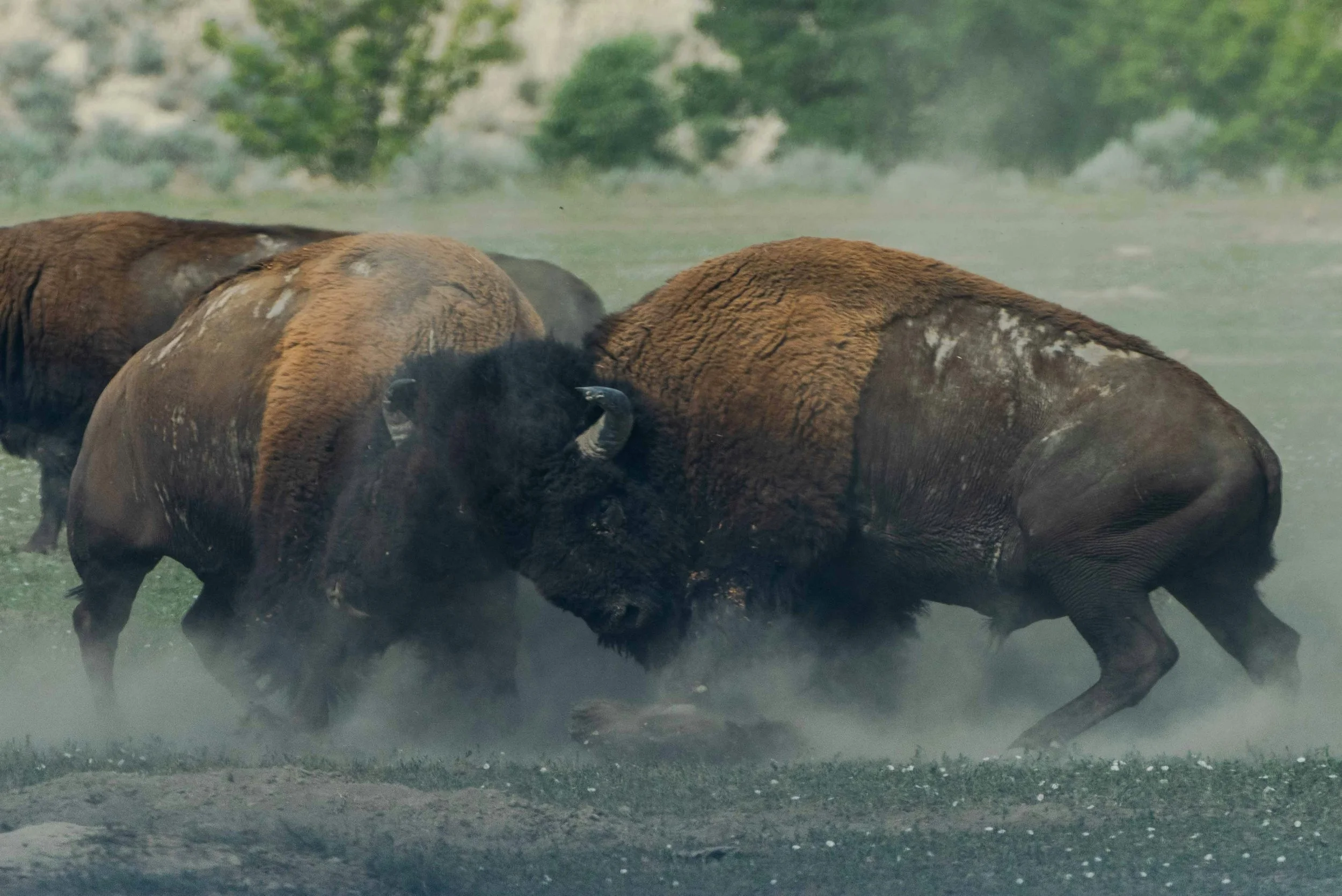
We love to imagine bison battle all day, but mostly they just eat grass | Unsplash
Wildlife watching is mostly waiting, and ambient content is a great way to capture that experience.
Ambient nature videos occupy a strange corner of the internet. They are often hours long and designed less for active viewing than companionship. People put them on while they work, study, read, cook, sleep, or simply want something calmer occupying the screen beside them. Search for nature videos for studying or relaxing nature sounds and you enter an enormous digital ecosystem of rainstorms, ocean waves, bird calls, fireplaces, and increasingly elaborate virtual environments designed to make our indoor lives feel a little less indoor.
For us, the appeal of ambient nature content is that it offers yet another way to spend time with the natural world.
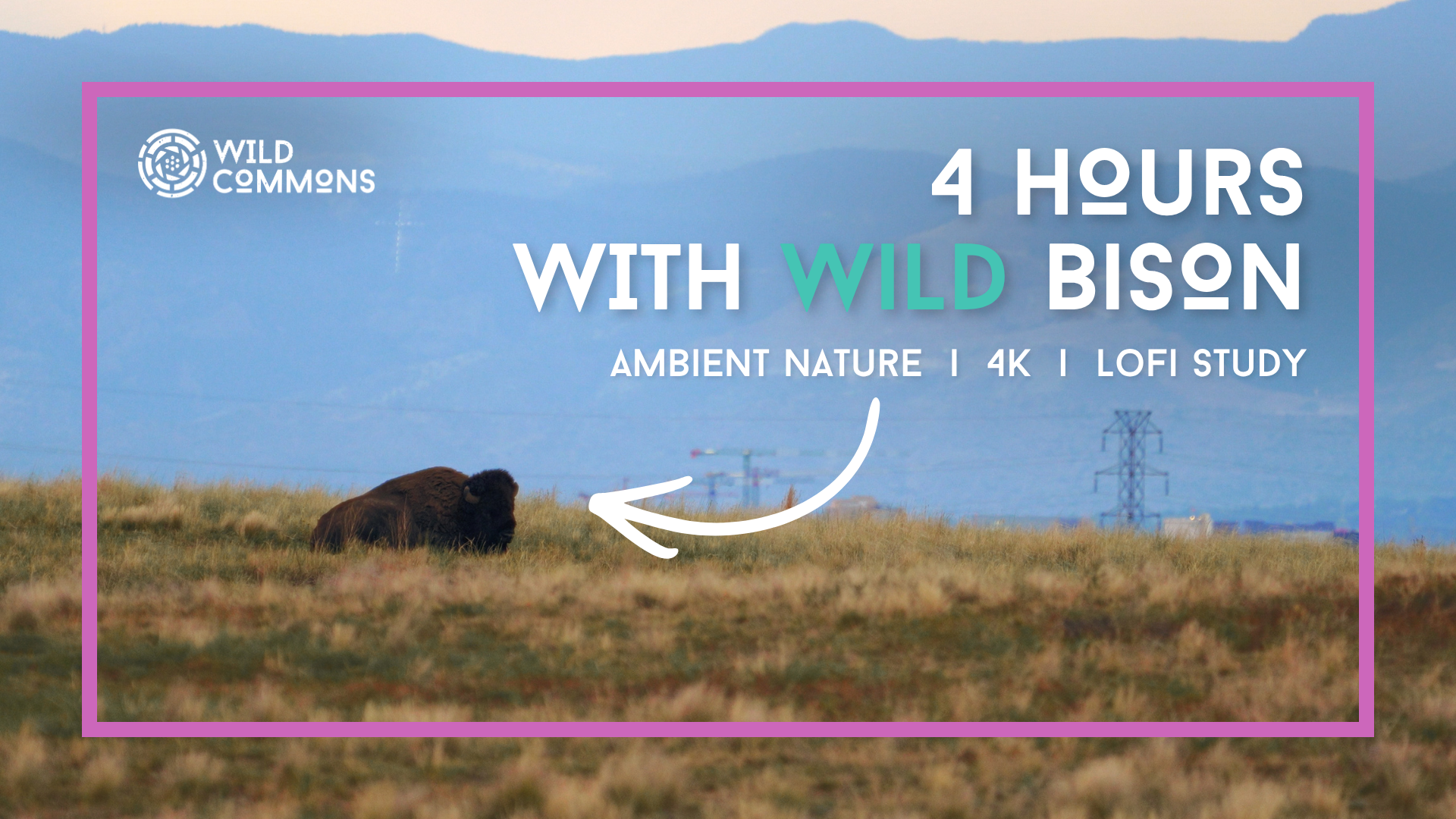
For four hours, you can share a landscape with a herd of bison at Rocky Mountain Arsenal National Wildlife Refuge, a place shaped by an extraordinary and complicated human history. This prairie has been Indigenous land, farmland, a chemical weapons manufacturing site, a Superfund cleanup site, and now, remarkably, a national wildlife refuge. The bison grazing there are part of a much larger story about what we have asked of this landscape, what we have done to it, and what we have chosen to protect.
Put the film on while you work. Study beside a herd of bison. Read while wind moves through the grass. Then, every once in a while, look up. The point is not to watch every minute. It is to spend a little time in the presence of another species
There is something appealing about that small, undemanding encounter, especially when so much of our digital world is engineered to do the opposite. Screens flash, ping, scroll, autoplay, and constantly ask us to pay attention. Ambient nature content asks very little. The landscape does not need to entertain you, and the bison do not need to perform. They are simply allowed to move through their day while you move through yours.
Maybe that is what makes four hours of bison doing absolutely nothing feel worthwhile?
Can Digital Nature Still Be Nature?
A screen is obviously not a prairie. Watching wind move through grass cannot reproduce the feeling of experiencing it for yourself.
But researchers have become increasingly interested in what happens when our encounters with nature are mediated through screens. A 2024 meta-analysis found that exposure to digital nature, including nature videos, images, and immersive experiences, can support stress recovery. And in a study published in Scientific Reports, researchers found that adolescents who watched six minutes of a virtual woodland reported lower stress, greater relaxation, improved mood, and a stronger sense of connection to nature.
A screen is certainly not a substitute for standing in a forest or on a prairie, but the research suggests that even an imperfect window into the natural world may still have value.
That matters because access to nature is not simple or evenly distributed. We increasingly live and work indoors. Many people live far from large natural spaces or cannot easily access them because of mobility, transportation, weather, work, caregiving, or any number of other constraints.
For many of us, a screen is our connection to the world for eight hours a day; every now and then, it might as well be full of bison.
Four Hours With Bison
For our first ambient nature film, we went to Rocky Mountain Arsenal National Wildlife Refuge outside Denver, Colorado. Today, the refuge encompasses roughly 15,000 acres of prairie, wetlands, and wildlife habitat, but its history is considerably more complicated. The site was transformed into a chemical weapons manufacturing facility during World War II and later used for Cold War weapons production and agricultural chemical manufacturing. Decades of contamination were followed by one of the largest environmental cleanup efforts in the country, and much of the former arsenal eventually became a national wildlife refuge.
Bison were reintroduced there in 2007. Today, a herd once again moves across a landscape that, within living memory, was being used to manufacture chemical weapons.
There is something quietly remarkable about the fact that a place with such a complicated human history has become a place where, on an ordinary afternoon, very little happens at all.
Making Room for Nothing
We live in a culture that has become remarkably good at turning nature into spectacle. We seek the biggest animal, the rarest behavior, the most dramatic landscape, the closest encounter. Nature documentaries have given us access to extraordinary worlds, and at their best, those stories can fundamentally change how we understand our place on this planet.
But spectacle is not the only way we form relationships with the natural world.
Those relationships are also built through repetition, familiarity, boredom, and time. They come from seeing the same birds outside your house every morning, learning where the rabbits disappear at dusk, or sitting beside a river long enough that you eventually stop waiting for something to happen. Sometimes connecting with nature means understanding its story. Sometimes it means simply spending time there.
That is why ambient nature belongs on Wild Commons.
We will continue sharing documentaries filled with discoveries, conflicts, characters, ideas, and stories worth paying attention to. But we also want to make room for another kind of experience, one that asks almost nothing from the viewer and nothing at all from the wildlife.
Put it on while you work. Let the prairie occupy a corner of your day. Look up occasionally.
The bison will be there, doing absolutely nothing.
And that might be enough.