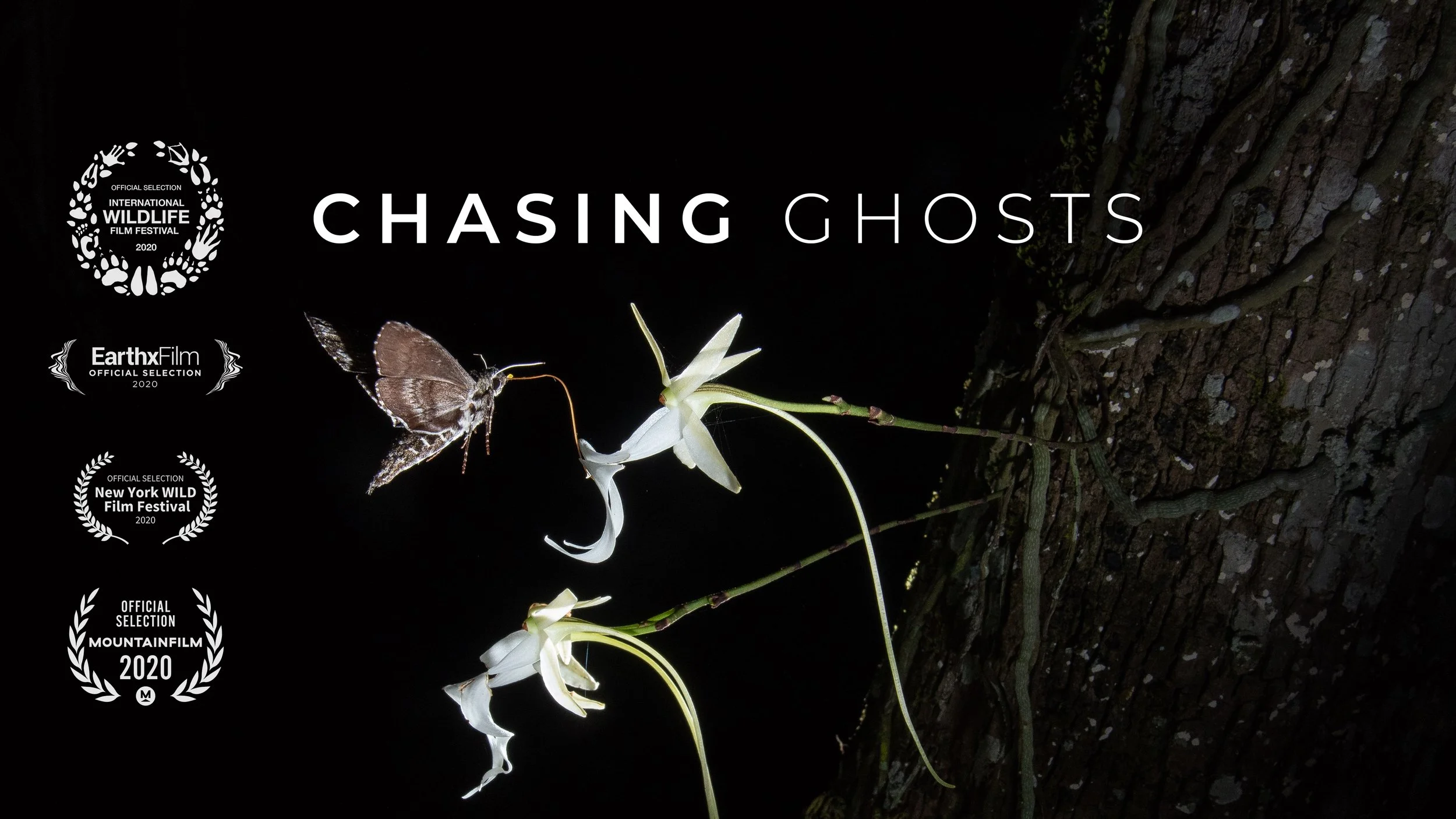
Chasing Ghosts - What Was Really Pollinating the Ghost Orchid?
Chasing Ghosts is a story about discovery, science and conservation. Taking place deep in the Florida Everglades, this film contains unrivaled beauty and a new take on the scientific process. Photographers Carlton Ward Jr., Mac Stone, and ecologist Peter Houlihan tell the story of discovery and conservation through their experiences and breathtaking cinematography.
Rare and Mysterious Plants
A decades-long mystery has gripped certain plant species in the Florida Everglades. The ghost orchid is a main character in this mystery, one that echoes a puzzle Charles Darwin encountered over 150 years ago. Darwin observed a Madagascan orchid with a nectar tube nearly a foot long and predicted a moth with an equally long proboscis must exist to pollinate it, a moth no one had ever seen. Decades later, he was proven right. The ghost orchid presents the same kind of puzzle in the swamps of Florida: an extreme adaptation implying an equally extreme, and equally unproven, pollinator.
Ghost orchids are incredibly important plants that contribute to healthy ecosystems. They belong to the orchid family, the most diverse group of flowering plants in the world, with an estimated 25,000 to 30,000 known species. Pollinators are vital for the health of everyone and everything on our planet - assisting with food production, preventing environmental degradation, producing raw materials, even increasing carbon sequestration.
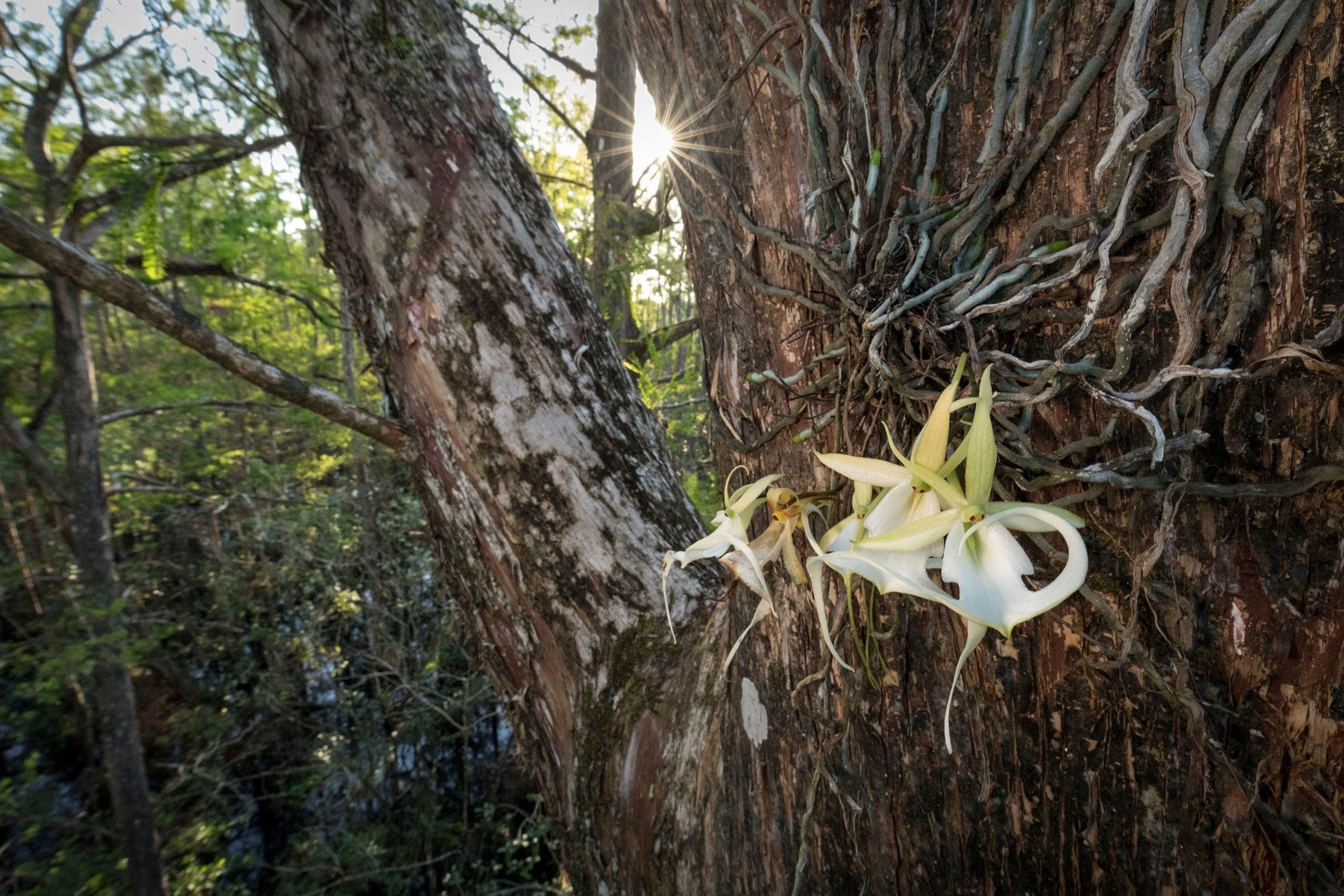
(C) Mac Stone
Ghost orchids also provide a window into the ancient natural history of areas like the southeastern United States. The swamps deep in the Everglades hold entire ecosystems in miniature, and the ghost orchid is a living relic of the larger, more expansive biome that once stretched across the region. The extreme specialization of this plant no doubt takes many thousands of years of evolution, making the protection of these areas even more important.
A Brand New Discovery
With hopes draining and motivation waning, a brand new discovery reignited their momentum. Belaying high in a tree, Mac caught a glimpse of a giant sphinx moth and captured the moment on his camera trap. This sphinx moth actually has a proboscis too large for the ghost orchid, suggesting it might not be the plant's only pollinator after all. Its proboscis protruded far past the flower, a clue that other, still-undiscovered moth species might be doing the actual work of pollination.
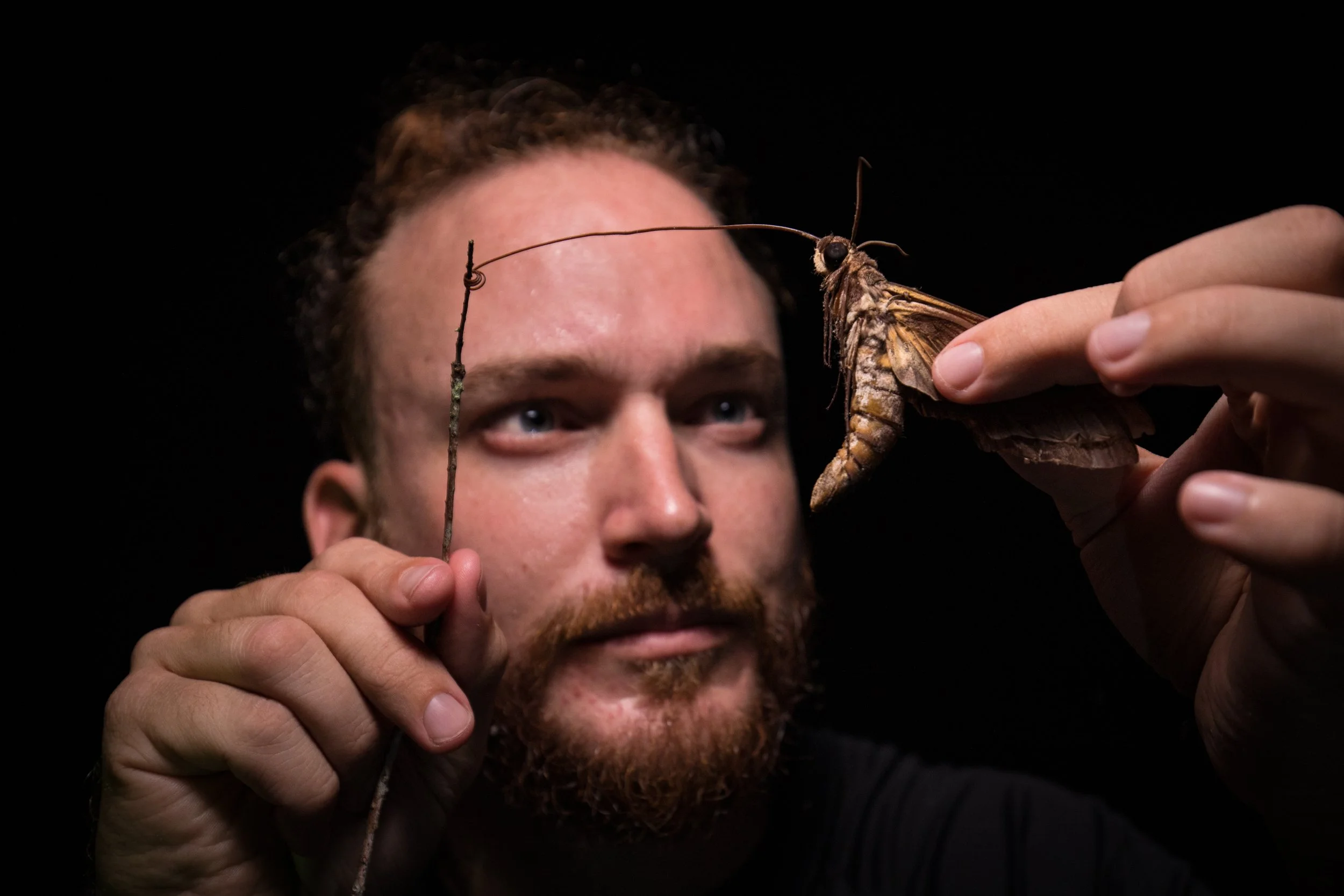
(C) Mac Stone
This moment opened up into new ideas and questions. While Mac was in trees, Carlton was paddleboarding around the swamps setting up separate camera traps to increase their chances of capturing the moment of pollination. He was able to find a separate moth species pollinating the ghost orchid as well. What started with a hunt for one moth species turned into the discovery of five new species.
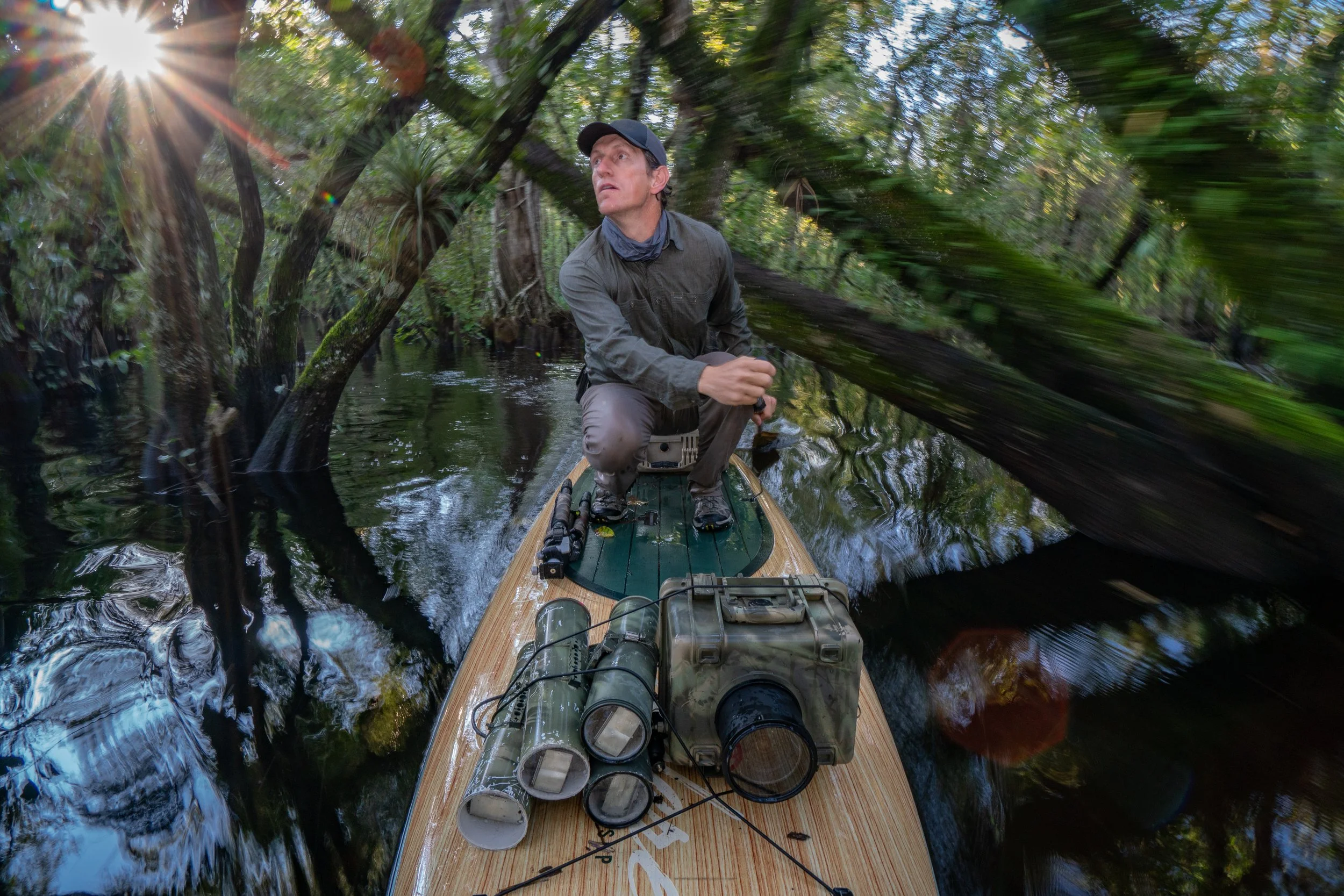
Carlton Ward
Conservation Incentive
Stories like this provide great incentive for the conservation of these incredibly wild areas in Florida. Just like the moths and the ghost orchid, there are other highly specific organisms adapted to equally precise conditions, made possible by long-term evolution in the near-total absence of human disturbance. It’s easy to get caught up in the thrill of discovery in a story like Chasing Ghosts, but it’s essential to remember that none of it would be possible without healthy ecosystems, which are becoming increasingly difficult to come by.
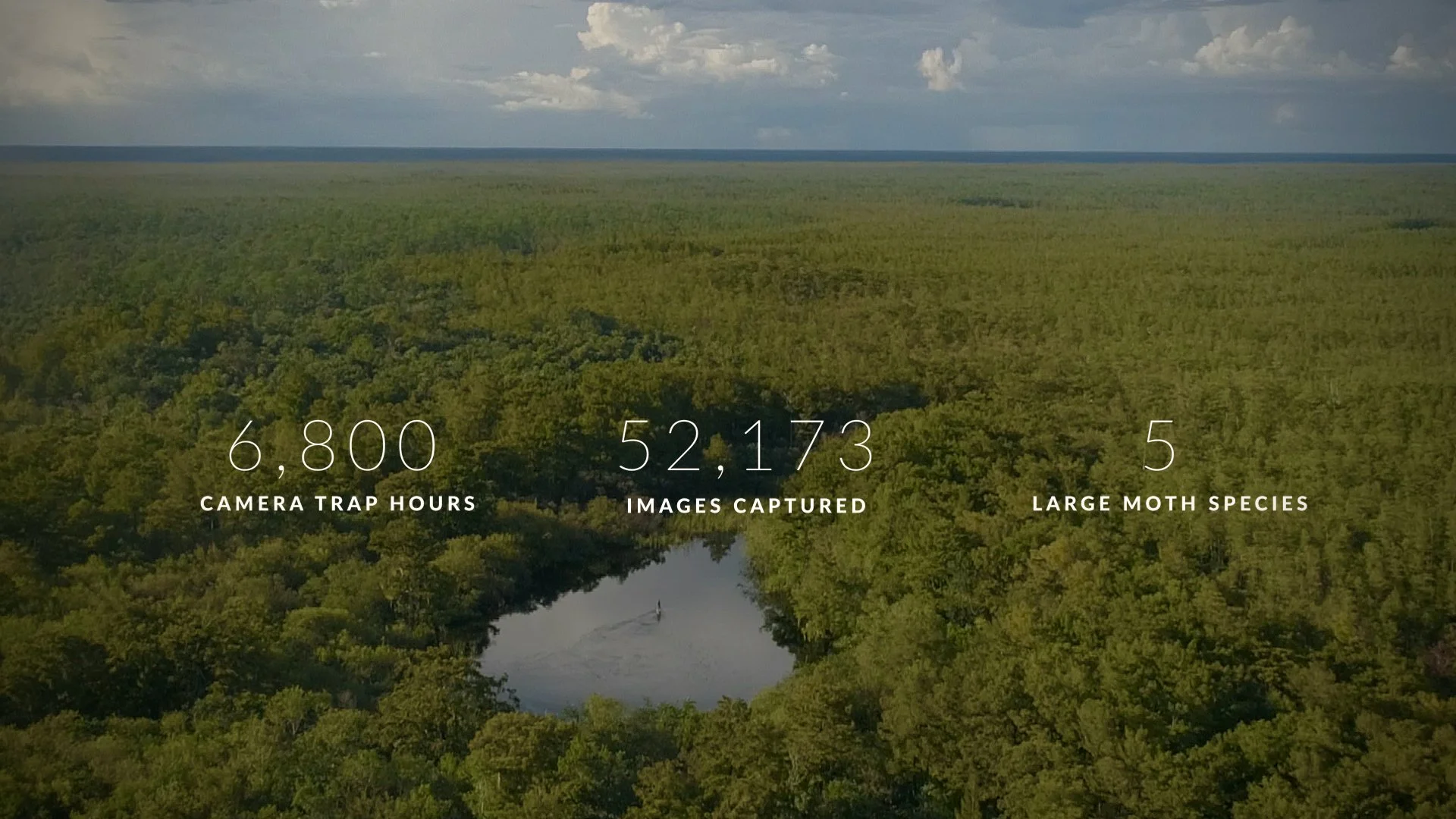
After 6,800 camera trap hours, 52,173 images captured, and 5 new large moth species discovered, it’s safe to say the journey was eventful. Climbing, wading, paddleboarding, and sleeping in the deep flooded remote swamps of Florida provide the viewers with a glimpse into just how wild this landscape still is. These protected areas used to extend all across the southeastern United States, however habitat degradation and urban sprawl have created new limits for sensitive species like the ghost orchid and its pollinators. At its heart, Chasing Ghosts is a story to inspire conservation of the world’s wildest areas.