The Last fin | Wild Commons
Sharks have survived for more than 400 million years, weathering multiple mass extinctions. Yet today, many species face unprecedented declines driven largely by one human demand: the global trade in shark fins. Worth hundreds of millions of dollars each year, the shark fin trade has fueled intensive fishing across the world’s oceans, with an estimated 100 million sharks killed annually. As populations continue to decline, conservationists are faced with a difficult question: how do we protect sharks while recognizing that, for many coastal communities, shark fishing remains a vital source of income?
The Last Fin: Why Shark Conservation Is About More Than Sharks
Every conservation story has a place where the global becomes personal. In The Last Fin, that place is Tanjung Luar, Indonesia, where generations of fishermen have built their lives around the sea and where the future of sharks is intertwined with the future of an entire community. Rather than reducing one of marine conservation’s most contentious issues to a simple debate over right and wrong, filmmaker Lexi Addison invites us into the lives of the people living at its center. The result is a thoughtful documentary that asks not only how we save sharks, but how we build a future where conservation and coastal livelihoods can succeed together.
Sharks Have Ruled the Oceans for Hundreds of Millions of Years
Long before dinosaurs walked the Earth, sharks were already shaping life in the oceans. Over more than 400 million years, they have survived multiple mass extinctions and evolved into one of the planet’s most successful groups of predators. Today, more than 500 species inhabit nearly every marine ecosystem, from shallow coral reefs to the open ocean and the deep sea.
Sharks play an essential ecological role. As apex and mesopredators, they help regulate marine food webs, maintain healthy fish populations, and prevent any one species from dominating an ecosystem. Healthy shark populations contribute to the resilience of coral reefs, seagrass meadows, and coastal fisheries that millions of people rely upon for food and livelihoods.
But sharks also share a biological disadvantage. Many species grow slowly, reach sexual maturity late, and produce relatively few offspring. Unlike many fish that can rebound quickly after heavy harvests, shark populations often require decades to recover. When fishing pressure exceeds what populations can sustain, declines can be both rapid and long-lasting.

As shark populations decline, the balance of marine ecosystems begins to shift. The impacts ripple outward to fisheries, coastlines, and communities that depend on a healthy ocean | Image: Unsplash
The Global Shark Fin Trade
The greatest threat facing many shark species today is overfishing, much of it driven by the international demand for shark fins.
Shark fins are prized in some markets for shark fin soup, a dish that has long carried cultural significance and social prestige. While demand has declined in some regions thanks to public awareness campaigns and policy changes, the global trade remains substantial. Fins often represent the most valuable part of the animal, creating strong economic incentives to continue fishing even as populations decline.
The challenge extends far beyond finning alone. Around the world, sharks are also harvested for meat, liver oil, cartilage, and other products, while many species are unintentionally caught as bycatch in commercial fisheries. Together, these pressures have contributed to widespread declines across many shark populations, with numerous species now listed as threatened or endangered.
The Human Side of Conservation
It is easy to discuss conservation in terms of species, statistics, and regulations. It is much harder to discuss the people whose lives are woven into those ecosystems.
In communities like Tanjung Luar, fishing is more than an occupation. It is a source of food, income, identity, and cultural tradition passed down through generations. For many families, shark fishing has long represented one of the few reliable economic opportunities available.
That reality does not diminish the urgency of shark conservation. Instead, it reveals why conservation solutions must extend beyond simple prohibitions. Lasting progress depends on creating alternatives that allow communities to thrive while reducing pressure on vulnerable wildlife.
This is the conversation The Last Fin brings to the forefront.
Rather than portraying fishermen as adversaries, the film explores the broader economic systems that shape their decisions. International markets, consumer demand, government policies, and conservation efforts all intersect in ways that influence what happens on the docks each morning. By listening first, the documentary creates space for a more honest and productive conversation about the future of both sharks and coastal communities.
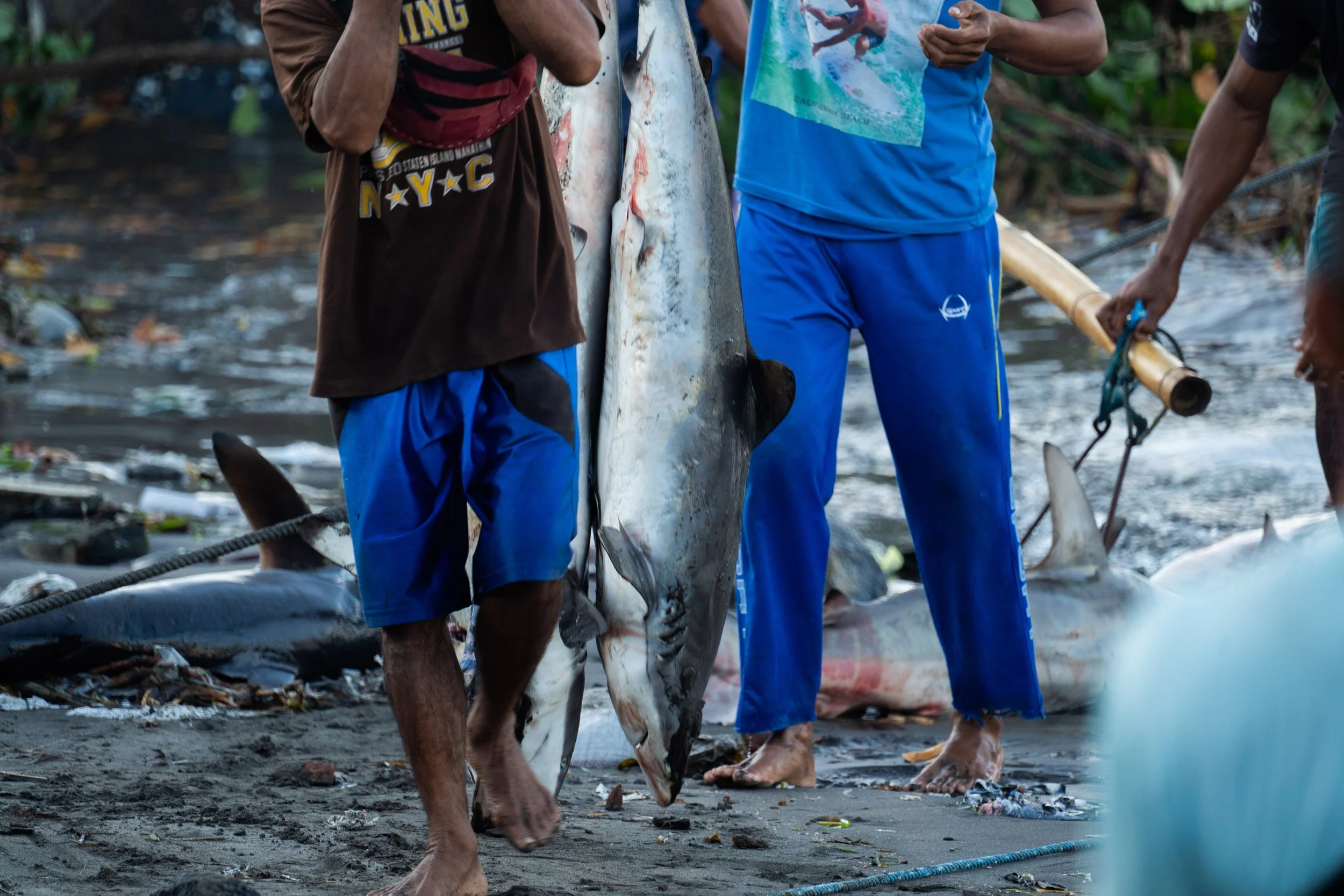
A fisherman carries sharks to be processed for their dorsal fin, in the short documentary film, “The Last Fin” | Wild Commons
Why The Last Fin Stands Out
Many wildlife documentaries focus primarily on the animals themselves. The Last Fin understands that conservation is ultimately about relationships—between people and nature, local communities and global markets, and present-day livelihoods and future generations.
Its greatest strength is its willingness to embrace complexity. There are no easy villains, no miraculous solutions, and no oversimplified narrative. Instead, the film recognizes that meaningful conservation requires empathy alongside science and collaboration alongside policy.
That perspective reflects a broader shift within conservation itself. Increasingly, successful conservation initiatives are built with local communities rather than imposed upon them. Indigenous knowledge, community leadership, sustainable fisheries management, and economic opportunity are becoming central components of protecting biodiversity around the world.
Film Credits
Director: Lexi Addison
Location: Tanjung Luar, Indonesia
Runtime: 5 minutes
Subject: Shark conservation, the global shark fin trade, fisheries, and coastal livelihoods
Watch The Last Fin, a documentary exploring the global shark fin trade through the lives of an Indonesian fishing community, revealing the complex relationship between shark conservation, coastal livelihoods, and the future of our oceans.
Why We Chose The Last Fin for Wild Commons
At Wild Commons, we’re drawn to films that challenge assumptions rather than reinforce them.
The Last Fin reminds us that conservation is rarely a choice between wildlife and people. More often, it is the search for solutions that sustain both. By telling the story of one Indonesian fishing community, the film opens a window onto one of the defining conservation challenges of our time: how we protect biodiversity in a world where millions of people depend directly on natural resources.
Beautifully photographed and deeply compassionate, The Last Fin demonstrates the power of documentary filmmaking to move beyond headlines and reveal the human stories beneath them. It is a film that leaves viewers with a deeper understanding not only of sharks, but of the communities whose futures are inseparable from the health of our oceans.