BlueBird Man | Wild Commons
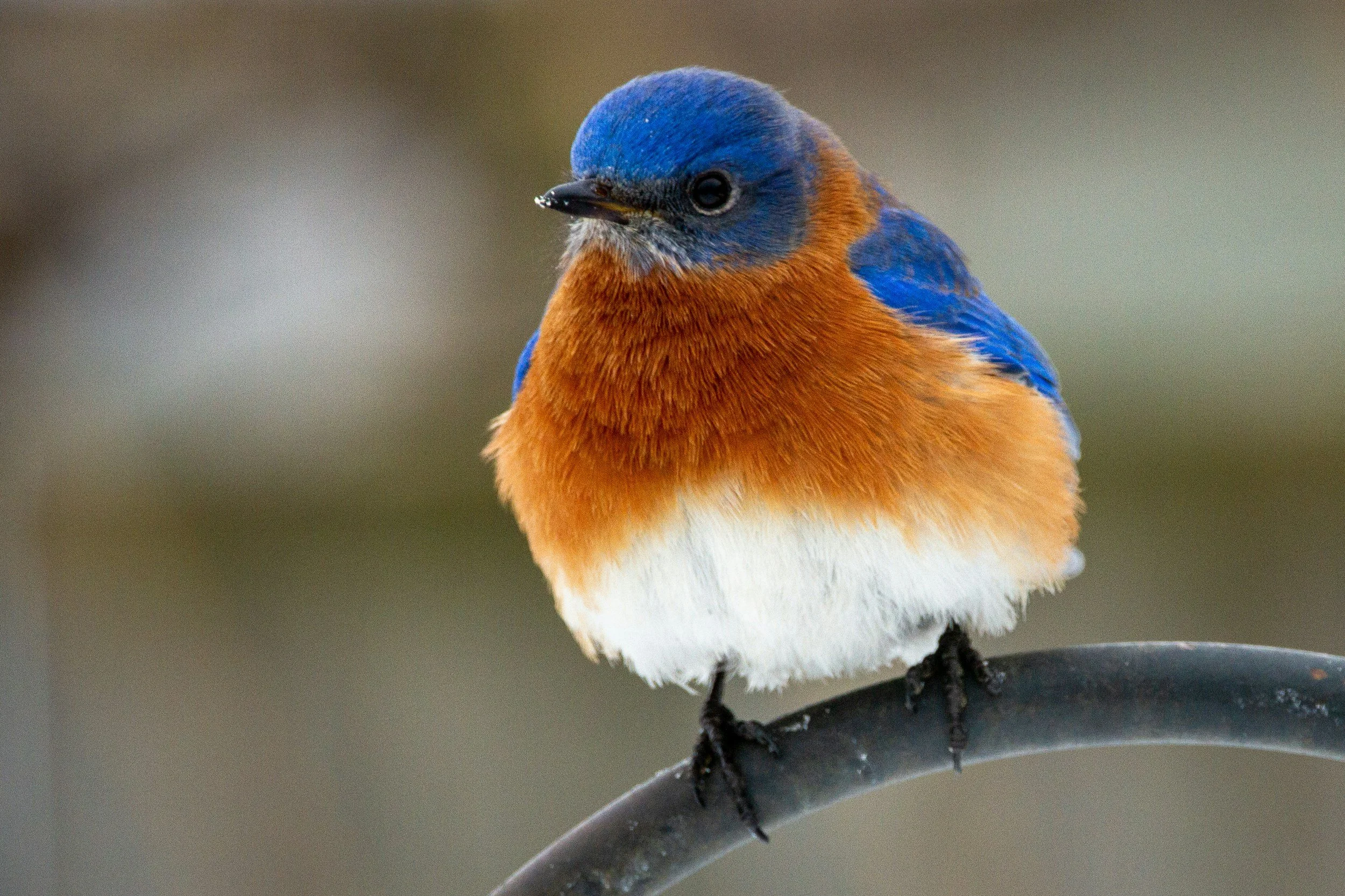
For more than 40 years, Idaho naturalist Al Larson devoted his life to one simple act: checking bluebird nest boxes. What began as a retirement hobby became one of North America’s longest-running citizen science efforts, helping recover bluebird populations after decades of decline.
Bluebird Man: The Documentary That Preserved a Lifetime of Conservation
There are wildlife documentaries about extraordinary animals, and there are wildlife documentaries about extraordinary people. Bluebird Man is unusual because it reveals that the two are inseparable. Its subject is not simply the bluebirds that flash across the screen. It is the quiet relationship between one man and a landscape, and the remarkable truth that conservation is often built not through dramatic moments of discovery, but through decades of patient, repetitive work that almost no one notices.
For more than 40 years, Idaho naturalist Alfred “Al” Larson drove the same dusty backroads through the Owyhee Mountains, stopping every few hundred yards to inspect wooden nest boxes he had built and maintained himself. He checked eggs, banded nestlings, repaired damaged boxes, recorded observations, and returned again the following week. Then the next season. Then the next year. By the end of his life, Larson had banded over 30,000 bluebirds, and quietly assembled one of the longest-running citizen science efforts in North America.
It would have been easy for that story to disappear with him.
Instead, Bluebird Man ensures that it will continue inspiring new generations of conservationists long after Larson’s passing in 2025 at the age of 103. The film is more than a portrait of an exceptional volunteer. It is a record of a philosophy of conservation that feels increasingly rare: one rooted in stewardship rather than spectacle, consistency rather than urgency, and optimism rather than despair.
Finding an extraordinary story hiding in plain sight
Like many great documentaries, Bluebird Man began with chance.
Director Neil Paprocki was conducting graduate research on birds of prey in southwestern Idaho when he first encountered Al Larson. As a wildlife biologist, Paprocki immediately understood the ecological significance of Larson’s work. Decades of carefully collected observations had documented bluebird populations across an enormous landscape, creating a remarkably valuable long-term dataset. But what struck him even more was the person collecting it.
Larson never described himself as a scientist.
He wasn’t chasing awards, building a career, or publishing papers. He simply believed that bluebirds deserved places to nest and that someone ought to keep an eye on them.
Paprocki recognized that Larson represented a generation of citizen conservationists whose contributions often fall between the cracks of public memory. Their names rarely appear in textbooks, yet countless conservation successes have depended upon volunteers willing to dedicate years—sometimes decades—to monitoring wildlife, restoring habitat, and collecting data that professional scientists could never gather alone.
Together with co-director, producer, and cinematographer Matthew Podolsky and the nonprofit production company Wild Lens, Paprocki set out to document not only Larson’s work, but the mindset behind it. Rather than producing another film about environmental crisis, they wanted to explore what conservation looks like when someone simply commits to showing up, year after year, for the same species and the same landscape.
The challenge of filming patience
That idea presented an unusual filmmaking challenge.
Wildlife documentaries are often built around dramatic events. A predator hunts. A rare animal emerges from hiding. A species teeters on the brink of extinction. These moments naturally create narrative tension.
Bluebird Man unfolds differently. Much of its action consists of routine. Larson drives. He parks. He opens another nest box. Sometimes he finds eggs. Sometimes hungry nestlings. Sometimes nothing at all. He records his observations, closes the box, and moves on to the next stop.
On paper, it hardly sounds cinematic.
Yet the filmmakers understood that repetition was precisely the point. Larson’s routine is not a backdrop to the story—it is the story. Every healthy brood exists because someone installed a nest box years earlier. Every successful breeding season depends on thousands of previous acts of maintenance and care that audiences never see. By embracing this rhythm instead of fighting it, the film transforms ordinary fieldwork into something unexpectedly meditative.
The sweeping cinematography of Idaho’s sagebrush deserts and mountain valleys reinforces that feeling. Wide landscapes give way to intimate close-ups of bluebird chicks only days old, reminding viewers that conservation always operates at multiple scales. Vast ecosystems ultimately depend upon countless small decisions made by individuals willing to care for one nest, one stream, or one patch of habitat at a time.
The result is a documentary that feels less like an adventure film and more like spending a day alongside someone who has learned how to pay attention.
A conservation story with a hopeful ending
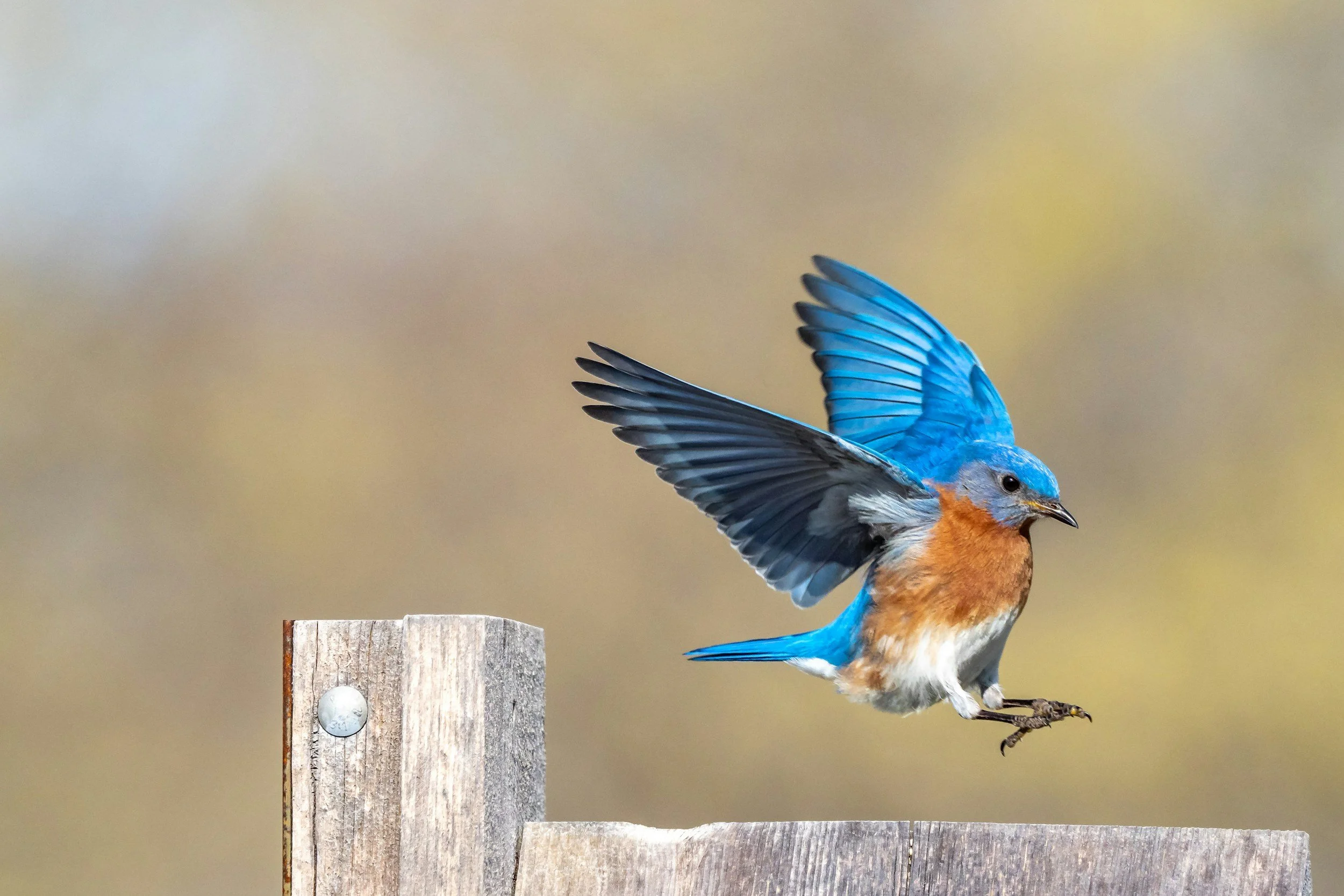
Bluebirds were once among North America’s most familiar birds, but by the middle of the twentieth century their numbers had declined dramatically. As forests were cleared, dead trees removed, and development expanded, the natural cavities bluebirds depend upon for nesting became increasingly scarce. Competition from introduced European Starlings and House Sparrows only intensified the problem, leaving many bluebirds without safe places to raise their young.
The solution proved remarkably simple.
Properly designed nest boxes could replace the nesting cavities that had disappeared from the landscape. Across North America, volunteers began establishing “bluebird trails”—networks of artificial nest boxes monitored throughout the breeding season. These efforts became one of the continent’s largest citizen conservation movements, helping bluebird populations recover across much of their historic range.
Larson devoted his retirement to that movement.
His trail eventually stretched across hundreds of miles of southwestern Idaho, and every nesting season he carefully documented its success. Thousands of birds fledged because someone kept returning to repair broken boxes, remove invasive nests, and ensure that suitable habitat remained available.
Bluebird Man never overstates Larson’s accomplishments, yet it subtly reveals an important truth: conservation victories are rarely the result of one heroic act. They emerge from thousands of modest actions accumulated over time.
That lesson feels especially important today.
Environmental storytelling often focuses on catastrophe, and for good reason. Climate change, biodiversity loss, habitat destruction, and pollution demand urgent attention. Yet an exclusive focus on crisis can leave audiences feeling powerless. If every environmental story ends with collapse, people begin to wonder whether their own actions matter at all.
Bluebird Man offers another possibility.
It demonstrates that long-term commitment can reshape ecosystems. It reminds us that wildlife recovery is possible. Most importantly, it argues that ordinary people have always been among conservation’s greatest strengths.
The legacy of Al Larson
When Al Larson passed away in 2025, conservation lost one of its quietest champions.
He left behind far more than decades of field notes and thousands of banded birds. He left an example of what stewardship can look like over an entire lifetime. In an age increasingly defined by speed, efficiency, and constant change, Larson embraced the opposite approach. He understood that meaningful ecological work often unfolds slowly enough that no single season reveals its full impact.
That perspective gives Bluebird Man an emotional weight it did not carry when production first began.
The documentary has become Larson’s legacy as much as his nest boxes. Future audiences will never accompany him down those Idaho backroads, but they can watch him gently open another box, smile at a healthy brood, and continue to the next stop with the quiet confidence of someone who has found purpose in caring for a place.
The filmmakers could not have known they were creating a memorial.
Instead, they created something more enduring: a living record of conservation in practice.
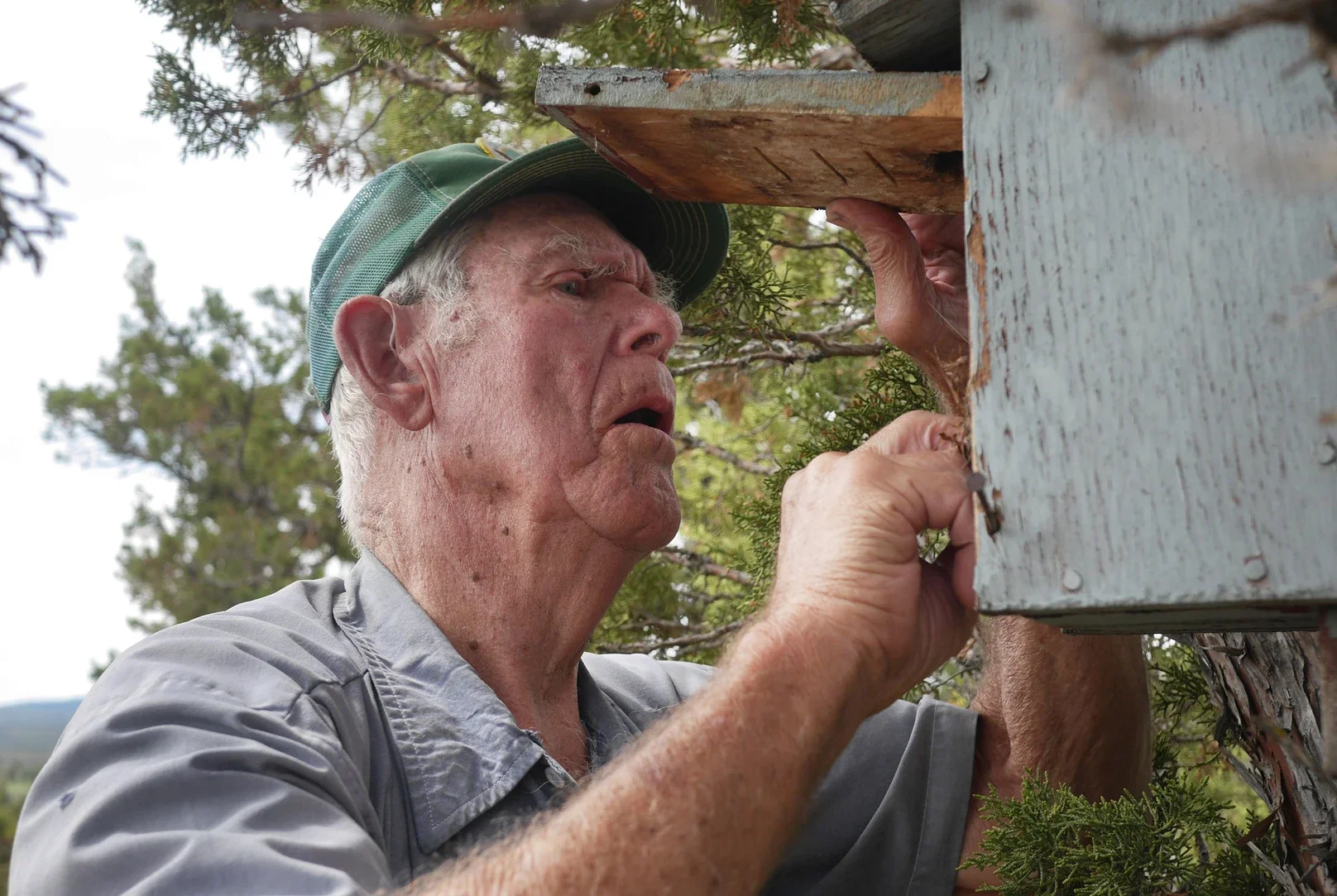
Conservation icon and documentary star Alfred Larson examines the contents of a nest box in Prairie, Idaho. Since taking up the initiative in retirement, the nonagenarian has installed hundreds of these structures, allowing scientists to study Mountain Bluebirds as the species recovers from historical declines and grapples with new uncertainties. Photo: Matthew Podolsky
Why Bluebird Man belongs on Wild Commons
At Wild Commons, we believe that independent documentaries deserve lives far beyond their festival premieres or television broadcasts. The best films continue creating change long after the credits roll, inviting new audiences into conversations about science, conservation, and our relationship with the natural world.
Bluebird Man embodies that mission perfectly.
It is a beautifully crafted documentary, but its greatest achievement lies in expanding our understanding of who conservation belongs to. The film suggests that environmental progress is not driven exclusively by professional scientists, nonprofit organizations, or government agencies. It also depends upon retired teachers, ranchers, birdwatchers, farmers, and volunteers who choose to care deeply about one place for a very long time.
In many ways, Al Larson’s story is not unique. Every community has people like him whose quiet work sustains trails, wetlands, forests, rivers, or local wildlife populations without attracting much attention. What makes Bluebird Man extraordinary is that it asks us to notice them. It reminds us that some of conservation’s most important figures never become famous, yet their cumulative impact can shape entire ecosystems.
That is ultimately why this film matters. It is not simply a documentary about bluebirds, nor even about one remarkable man. It is a meditation on stewardship itself—a celebration of the countless acts of care that rarely make headlines but gradually change the world.
Al Larson spent more than four decades opening nest boxes one by one. Thanks to Bluebird Man, his life’s work continues to open something larger: the possibility that each of us can leave the natural world a little better than we found it.
Film Credits
Directors: Neil Paprocki and Matthew Podolsky
Producer: Matthew Podolsky
Production Company: Wild Lens Collective
Featuring: Alfred “Al” Larson
Subject: Bluebird conservation and citizen science in Idaho’s Owyhee Mountains
Runtime: 26 minutes
Release Year: 2014
Watch Bluebird Man, an Emmy-nominated wildlife documentary about Al Larson’s lifelong effort to recover North America’s bluebirds through citizen science and nest box conservation.