Phir Bhi | Wild Commons
In Gujarat, India, local communities live alongside mugger crocodiles with remarkably little conflict. PHIR BHI (EVEN SO) explores this rare relationship, revealing how coexistence is built through tolerance, shared ecosystems, and community-driven conservation.
In much of the world, stories about large predators follow a familiar narrative: conflict, fear, retaliation, collapse. As habitat loss and development push people and wildlife into increasingly close contact, coexistence can feel impossible. But in the Charotar region of Gujarat, India, a different story is unfolding.
PHIR BHI (EVEN SO), directed by Meghna Nandy, explores a remarkable relationship between local communities and mugger crocodiles, one of India’s largest freshwater predators. Despite growing crocodile populations and rising human-wildlife conflict across India, Charotar has experienced fewer than ten attacks in an entire decade. The question at the heart of the film is both simple and profound: how is this possible?
Rather than presenting coexistence as a perfect or romanticized ideal, PHIR BHI examines the complicated social, ecological, and emotional systems that make it possible. Through fishermen, conservationists, and local residents, the film reveals that coexistence is not built through grand gestures alone, but through small daily acts of tolerance, adaptation, and mutual understanding.
The film arrives at a critical moment for conservation storytelling. Around the globe, expanding cities, agricultural development, and climate pressures are intensifying conflict between people and wildlife. Large predators are often framed as threats to human safety or obstacles to economic growth. PHIR BHI challenges that framing by showing a community where people and crocodiles continue to share space, even under increasing strain.
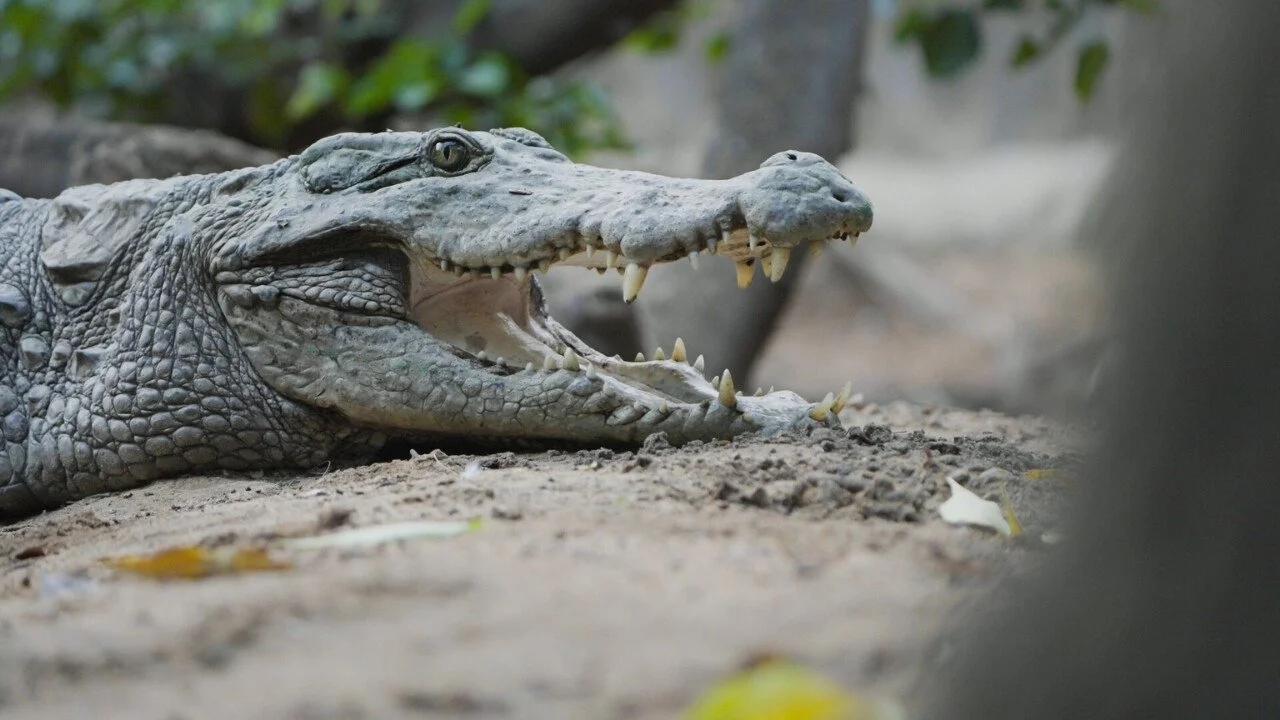
At the center of the story are mugger crocodiles, also known as marsh crocodiles, a species that has long occupied India’s freshwater ecosystems. Powerful, ancient, and often misunderstood, these reptiles are capable of causing serious harm. Yet the communities of Charotar have developed cultural and ecological relationships that allow both humans and crocodiles to persist together in the same landscape.
The documentary also recognizes how fragile this balance truly is. Beyond Charotar, conflict is increasing. Development pressures threaten wetland ecosystems, and rapid environmental change is reshaping the conditions that once made coexistence possible. When an unexpected crocodile rescue operation unfolds during the film, the community’s response becomes a powerful reminder that conservation is never only about protecting animals.
It is about protecting relationships, systems, and ways of living that allow shared survival.
Visually, PHIR BHI balances intimate human storytelling with striking natural history cinematography. The film moves fluidly between village life, wetland ecosystems, and moments of quiet tension, capturing the emotional complexity of living alongside a powerful predator. Rather than relying on spectacle alone, the documentary focuses on nuance, patience, and the deeply human dimensions of conservation.
The film was written, produced, and edited by Meghna Nandy, with cinematography by Nikki Dodd. Additional contributions include music by Leo Alexander and animation by Tatiana McCabe.
At Wild Commons, we believe some of the most important environmental stories are the ones that challenge simplistic narratives about nature and conservation. PHIR BHI is not just a film about crocodiles. It is a film about interdependence, resilience, and the difficult work of coexistence in an increasingly crowded world.
Film Credits
Director / Writer / Producer / Editor
Meghna Nandy
Cinematography
Nikki Dodd
Music
Leo Alexander
Animation
Tatiana McCabe
Additional Crew
Sachin Mishra
Vishal Mistry
Shubham Parmar